Fire Rated Downlights Regulations: Your Compliance Guide
November 18, 2025 · 22 min read
Every choice you make during construction impacts your home's resilience and how an insurance company views your property. A small detail like recessed lighting can have surprisingly large consequences. Installing standard downlights in a fire-rated ceiling creates a significant vulnerability, essentially leaving an open door for flames to spread between floors. Insurers are increasingly aware of these risks, especially in wildfire-prone regions. Failing to follow fire rated downlights regulations can affect your ability to get coverage or even lead to a denied claim. This article will explain how to choose compliant fixtures that protect your home, satisfy building codes, and give you confidence in your home's insurability.
Key Takeaways
- Restore Your Ceiling's Fire Barrier: Standard downlights create a weak point for fire to spread, but fire-rated fixtures are designed to expand and seal that opening, containing flames and buying you critical time.
- Check Local Codes and Certifications First: National standards are a baseline, but your local building authority sets the final rules. Always confirm the required minute-rating (e.g., 30, 60, 90) and look for trusted certification marks like UL or CSA before you buy.
- Proper Installation is Non-Negotiable: A certified fixture is useless if installed incorrectly. Skipping this step or using non-rated lights can lead to failed inspections, voided insurance claims, and a serious gap in your home's fire protection.
What Are Fire-Rated Downlights?
When you install recessed lighting, you have to cut holes in your ceiling. While this looks clean and modern, it creates a serious safety issue. Think of your ceiling as a protective barrier designed to slow a fire's spread from one floor to the next. Every hole you cut for a standard downlight is a potential weak point in that barrier, giving fire an easy path to travel through your home.
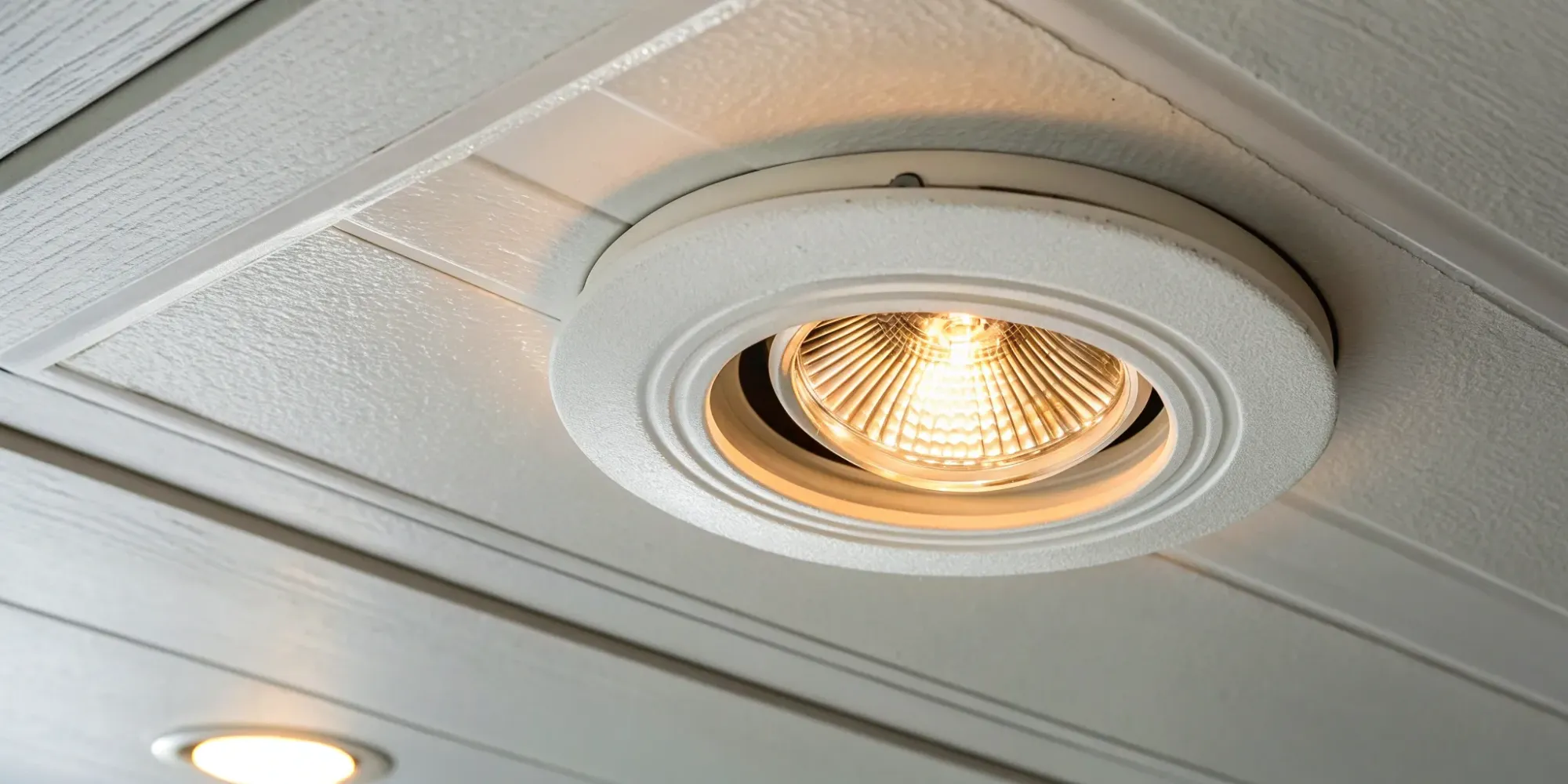
This is where fire-rated downlights come in. They are specially engineered fixtures that look just like regular downlights but have a critical built-in safety feature. Their job is to seal the hole they occupy if a fire breaks out, restoring the ceiling's integrity and helping to contain the flames. For anyone building or renovating, especially in a multi-story home or a high-risk area, understanding these fixtures isn't just about compliance—it's a fundamental part of building a safer, more resilient home. Choosing the right downlights ensures your design choices don't accidentally compromise your home's structural fire protection.
How they protect your home from fire
A fire-rated downlight is designed to maintain the ceiling's performance as a fire barrier. In the event of a fire, the fixture works to contain it by preventing flames from passing through the opening, stopping excessive heat from transferring to the floor above, and ensuring the ceiling can still support its structural load. By essentially plugging the hole it was installed in, the downlight helps keep the fire contained in one room for a crucial period. This slows the fire's spread between floors, giving occupants more time to evacuate safely and giving firefighters a better chance to control the blaze.
The science behind how they work
The technology behind a fire-rated downlight is surprisingly simple yet effective. The fixture contains a special pad or strip made from an intumescent material. Under normal conditions, this material is completely inert. But when exposed to the intense heat of a fire, it undergoes a rapid chemical reaction and expands dramatically—swelling up to many times its original size. This expanding material is dense and fire-resistant, creating a solid plug that seals off any gaps in and around the light fixture. This action effectively restores the ceiling's fire-rated barrier, blocking smoke and flames from passing through the opening.
Essential Building Codes for Fire-Rated Downlights
When you’re building or renovating, it’s easy to get caught up in the aesthetics—the paint colors, the finishes, the fixtures. But underneath it all, a set of rules is working to keep you safe: building codes. These aren’t just suggestions; they are legally enforceable standards designed to protect your home and family from hazards, especially fire. When it comes to recessed lighting, these codes are why fire-rated downlights are so important. Any time you cut a hole in a fire-rated ceiling (like the one between your garage and the bedroom above it), you create a potential pathway for flames to spread.
Building codes mandate that you must maintain the ceiling's fire-resistance rating. That’s where fire-rated downlights come in—they are specifically designed to seal that opening and stop a fire from moving from one floor to the next. While major codes like the International Building Code (IBC) provide a strong foundation, they are often just the starting point. Your local jurisdiction adopts and amends these codes, making it critical to know exactly what’s required in your area. Understanding these regulations is the first step toward building a home that’s not only beautiful but also compliant and resilient.
International Building Code (IBC)
Think of the International Building Code (IBC) as the foundational rulebook for construction in the United States. Its primary goal is to ensure public safety and welfare by setting minimum standards for everything from structural strength to fire resistance. The IBC establishes requirements to protect life and property from fire, and that’s where downlights come into play. When a ceiling is part of a fire-rated assembly—meaning it’s designed to contain a fire for a specific period—the IBC dictates that any penetrations must not compromise that rating. By installing a standard, non-rated downlight, you’re essentially creating a weak spot. Fire-rated downlights are engineered to meet IBC standards by restoring the ceiling’s integrity.
National Building Code of Canada (NBCC)
For those building in Canada, the National Building Code of Canada (NBCC) is the governing document. Much like the IBC, the NBCC’s purpose is to keep people safe and minimize property damage in the event of a fire. It outlines the technical requirements for designing and constructing new buildings, as well as for renovating existing ones. The NBCC mandates the use of fire-rated construction assemblies in specific situations, such as between separate housing units or between a home and an attached garage. If your plans involve installing recessed lighting in a ceiling that requires a fire rating under the NBCC, using certified fire-rated downlights isn’t optional—it’s a core requirement for compliance.
UK Building Regulations (Part B)
Across the pond in the United Kingdom, fire safety in buildings is governed by the Building Regulations, specifically Part B (Fire Safety). This regulation is laser-focused on preventing fires and limiting their spread if they do occur. It covers everything from fire detection and warning systems to the fire resistance of structural elements. According to Part B, any fixture that penetrates a fire-rated ceiling, floor, or wall must not reduce the structure's fire resistance. To comply, fire-rated downlights sold in the UK are typically tested to the BS EN 1365-2 standard, ensuring they can effectively block fire and smoke for a specified duration (e.g., 60 or 90 minutes).
Why local rules always come first
While national and international codes like the IBC and NBCC provide a comprehensive framework, they don’t have the final say. The most important rules are always your local ones. State, provincial, and municipal governments often adopt a model code and then amend it to address specific regional concerns, such as wildfire risk or seismic activity. This means the requirements in your city or county could be stricter than what the base code outlines. Before you purchase a single fixture, you must check with your local building department to understand their specific requirements for fire-rated construction. Getting this right from the start saves you from failed inspections, costly rework, and the risk of building a home that isn’t as safe as it should be.
What Do Fire Ratings Mean? (30, 60, 90, 120-Min)
When you see a fire rating on a building material, like a door, wall, or downlight, it’s telling you something incredibly important: how long that component can hold back fire. The numbers—30, 60, 90, or 120—represent the minimum number of minutes the product is certified to withstand fire and prevent it from spreading from one room to another. Think of it as buying precious time. This strategy, known as compartmentalization, is a cornerstone of fire safety design. It works by containing a fire to its room of origin, slowing its progress through the building.
This delay is critical. It gives occupants more time to evacuate safely and provides a crucial window for firefighters to arrive and control the blaze before it becomes a total loss. For homeowners in high-risk areas, understanding these ratings is not just about meeting code; it’s about building a more resilient home that can better protect your family and your investment. Choosing materials with the appropriate fire rating is a practical step that has a massive impact on the safety and insurability of your property. It ensures that every part of your home’s structure works together to create a cohesive fire defense system.
How to interpret fire ratings for your project
So, what does a "60-minute" rating actually mean in practice? Let’s use recessed downlights as an example. When you cut a hole in a ceiling to install a light, you’re creating a potential pathway for fire to travel through. A fire-rated downlight is specifically designed to plug that hole during a fire. These fixtures contain a special material called an intumescent pad. When exposed to high heat, this material rapidly expands to many times its original size, creating a fire-resistant seal. The rating tells you exactly how long that seal is certified to last, maintaining the ceiling's structural integrity and preventing flames from reaching the floor above.
Match the rating to your building type
The right fire rating for your project depends entirely on the building’s structure and use. It’s not a one-size-fits-all decision. Generally, a 30-minute rating is suitable for a ground-floor ceiling in a typical single-family home, where escape routes are direct. A 60-minute rating is often required for ceilings between floors in a multi-story home to protect the escape path for those upstairs. The longer 90 and 120-minute ratings are typically reserved for larger multi-family residences, commercial buildings, or high-risk areas where evacuation is more complex. Ultimately, your local building codes are the final authority, so always verify what’s required for your specific project.
How ratings affect your fixture choice
Your fixture choice has to be about more than just style; it must meet the safety standards mandated by law. Building codes, like the International Building Code (IBC), require fire-rated components in specific applications to minimize property damage and protect lives. When selecting products, look for certification marks from trusted third-party testing agencies like UL (Underwriters Laboratories), ULC, or CSA. These labels are your proof that the fixture has been rigorously tested and is made from materials that can perform as promised during a fire. Choosing certified products isn’t just about compliance—it’s about having confidence that your home’s safety features will work when you need them most.
Certifications That Matter: What to Look For
When you’re selecting materials for your home, certifications are your best friend. Think of them as a seal of approval that proves a product has been put through rigorous testing by an independent third party. For something as critical as fire-rated downlights, you can’t just take a manufacturer's word for it. You need proof that the fixture will perform as promised when it matters most.
Looking for these official marks is a straightforward way to filter out subpar products and ensure you’re meeting safety standards. These aren't just arbitrary labels; they are the specific credentials that building inspectors and insurance providers look for to verify compliance. Choosing certified products from the start gives you confidence that your home is built with materials designed for safety and resilience. It’s a simple step that protects your investment, your family, and your peace of mind.
Key testing standards: BS EN 1365-2, ASTM E119, UL 263
Before a product can earn a certification mark, it has to pass a test. These tests follow a strict set of rules, known as standards, to ensure every product is evaluated fairly and consistently. For fire-rated products in North America, two key standards are ASTM E119 and UL 263. They are the benchmarks used to determine how long building materials can withstand fire and prevent it from spreading. You might also see BS EN 1365-2, a common European standard, on products from international manufacturers. Knowing these codes helps you understand exactly what a product has been tested for.
Certification marks to find: UL, ULC, CSA
While standards are the "rules" of the test, certification marks are the "passing grade" you can see on the product itself. When you’re shopping for downlights, look for marks like UL (Underwriters Laboratories), ULC (Underwriters Laboratories of Canada), or CSA (Canadian Standards Association) on the packaging or the fixture. These logos confirm the product meets national safety requirements. Seeing one of these marks from a trusted organization like UL Solutions means the downlight has been independently verified for safety and performance, giving you assurance that it’s a reliable choice for your home.
Why an IC rating is crucial for insulation
Here’s a detail that’s easy to miss but incredibly important: the IC rating. "IC" stands for "Insulation Contact," and it means the light fixture is designed to be safely buried in ceiling insulation. Non-IC rated fixtures need open space around them to dissipate heat; if they’re covered with insulation, they can overheat and become a serious fire hazard. Since most modern homes have insulated ceilings to conserve energy, choosing IC-rated downlights is essential. It’s a non-negotiable feature for preventing a hidden fire risk right above your head. Always check for an IC rating on any recessed light you plan to install.
Overlooked Compliance Rules You Can't Ignore
Choosing a certified fire-rated downlight is a great first step, but the work doesn’t stop there. True compliance comes down to the details of the installation, and this is where many well-intentioned projects fall short. A fire rating is a complete system—the fixture, the housing, and the way it’s installed all work together to maintain your ceiling's fire barrier. If one part is wrong, the entire system can fail, leaving a critical gap in your home's fire defense.
Getting these details right is non-negotiable for passing inspections and ensuring your home is genuinely protected. Think of it this way: the downlight itself is just one component. How it’s sealed, how it interacts with your ceiling material, and whether it’s installed according to code are what truly deliver the fire protection you’re paying for. It's easy to focus on the fixture's rating and overlook the equally important installation process. This section will cover the overlooked rules that can make or break your project's safety and compliance. We'll look at why the right installation is just as important as the right product, how the sealing mechanism works, and why your ceiling type dictates your choices. Let’s walk through a few of the most critical rules that you absolutely can't afford to miss.
Proper installation to maintain the fire rating
A fire-rated downlight only holds its rating if it’s installed exactly as the manufacturer and electrical codes specify. You can’t just swap it in like a standard fixture. Installers must follow strict guidelines, such as the National Electrical Code (NEC) in the U.S. or the Canadian Electrical Code (CEC) in Canada. These rules dictate everything from wiring to placement.
Deviating from the instructions—even slightly—can void the certification and compromise the fire barrier. This is a common mistake that can lead to failed inspections and, more importantly, a serious safety hazard. Always ensure your electrician is familiar with the specific requirements for the fire-rated fixtures you’ve chosen.
Sealing and housing: getting it right
The real magic of a fire-rated downlight happens inside its housing. These fixtures contain a special material called an intumescent pad. When exposed to high heat during a fire, this material rapidly expands to many times its original size. This expansion completely seals the hole cut for the light, effectively plugging the gap and preventing flames and smoke from pouring through.
This feature is what restores the fire integrity of your ceiling. Without a properly designed housing and a functional intumescent seal, the downlight is just a hole in your fire defense. It’s crucial to choose fixtures with high-quality seals and ensure they aren’t damaged during installation.
Why your ceiling type matters for fire safety
When you cut a hole in a fire-rated ceiling to install a downlight, you create a significant weak spot. Fire is opportunistic; it will always find the easiest path to spread. A standard downlight offers no resistance, allowing fire to breach the ceiling barrier in minutes. This is why fire-rated downlights are so essential—they are specifically engineered to patch this vulnerability.
Your ceiling is designed to contain a fire for a specific period (like 30, 60, or 90 minutes). A compliant fire-rated downlight ensures that the hole you cut for it doesn't undermine that protection. This is why local building codes are often strict about requiring them, especially in multi-story homes, commercial buildings, and garages.
Common Myths About Fire-Rated Downlights
When it comes to fire safety, what you don't know can hurt you. Misinformation about fire-rated downlights is common, and these myths can lead to unsafe installations, failed inspections, and homes that aren't as protected as you think. Let's clear up a few of the most persistent myths so you can move forward with your project confidently and ensure your home is built to last—and to protect.
Myth: You can tell if it's fire-rated just by looking
This is a big one. From the outside, a fire-rated downlight can look exactly like a standard one. The critical safety components are internal and not visible once the light is installed. You simply can't rely on a visual check to confirm compliance. The only way to be certain is to check the product's official documentation and look for the proper certification marks. Always ask for the manufacturer's technical data sheet or look for official test reports that confirm it has passed the required fire-resistance tests. Don't just take a salesperson's word for it—verify the specs yourself before you buy.
Myth: Any downlight offers some fire protection
This is not only false but also dangerous. A standard, non-fire-rated downlight does the opposite of protecting your home. When you cut a hole in a ceiling to install a downlight, you compromise its ability to act as a fire barrier. A regular fixture leaves that hole open for flames and smoke to travel through to the floor above. Fire-rated downlights are specifically designed to solve this problem. They contain an intumescent material that expands when exposed to heat, completely sealing the opening and restoring the ceiling's fire integrity. A standard downlight is a vulnerability, not a safeguard.
Myth: The rules are the same everywhere
Assuming that a downlight compliant in one city is compliant in another is a recipe for a failed inspection. Building codes can vary significantly between states, provinces, and even local municipalities. For example, the requirements for a ceiling separating two units in an apartment building are often much stricter than those for a single-family home. What’s required in one jurisdiction might only be a recommendation in another. Before you purchase or install any fixtures, you must check your local building codes to understand the specific fire-rating duration (e.g., 60 or 90 minutes) and certifications required for your project type and location.
How to Choose the Right Compliant Downlights
Once you know the rules, picking the right fire-rated downlights becomes much more straightforward. It’s about looking past the style and finish to find fixtures that meet specific safety, material, and performance standards. Think of it as a simple checklist. You need to confirm the fire rating duration matches your project’s requirements, verify that the materials are certified by a trusted organization, and consider the long-term benefits of energy-efficient models.
Making the right choice at this stage saves you from costly rework, failed inspections, and—most importantly—it ensures your lighting doesn’t compromise your home’s fire barrier. A compliant downlight is designed to work as part of a complete fire protection system. Let’s walk through the three key things to check before you make a purchase, so you can feel confident that your lighting is both beautiful and safe.
Check the required fire rating duration
The first thing to check is the fire rating, which is measured in minutes. Downlights are tested to hold back fire for specific times—typically 30, 60, or 90 minutes—which tells you how long they can maintain the integrity of your ceiling in a fire. The rating you need isn’t a one-size-fits-all number; it depends entirely on the fire resistance of the ceiling you’re installing it in. For example, a standard single-story home might require a 30-minute rating, while a ceiling in a multi-story apartment building may need a 90-minute rating. Always check your local building codes or consult your architect to confirm the exact duration required for your specific construction type.
Verify material quality and certifications
A fire rating is only as reliable as the materials used to build the downlight and the testing it has undergone. Fire-rated downlights must be made from materials that can effectively resist fire. But how can you be sure? Look for certification marks from independent testing labs. In North America, you’ll want to find labels like UL, ULC, or CSA, which show the lights meet established national safety standards. Don’t just trust the packaging. Reputable manufacturers will provide a full test report upon request, giving you documented proof that the fixture performs as promised. Choosing a certified product is the best way to ensure it will function correctly when you need it most.
Consider energy efficiency and LED options
Safety and compliance don’t have to come at the expense of performance. Modern fire-rated downlights are designed to prevent heat loss, which means they won’t compromise your insulation or drive up your energy bills. For the best long-term value, look for integrated LED options. Not only are they highly efficient, but they also have an incredibly long lifespan, with many models lasting between 25,000 and 50,000 hours. This means you won’t be climbing a ladder to change bulbs anytime soon. Choosing an ENERGY STAR certified fire-rated downlight is a smart move that pays off in safety, compliance, and lower energy costs over the life of your home.
What Happens If You Skip Fire-Rated Downlights?
Choosing standard downlights over fire-rated ones might seem like a small cost-saving measure during a build or renovation, but the consequences can be serious. It’s not just about following a minor rule; it’s a decision that impacts the safety of your home, your legal standing, and your ability to get insured. Skipping this crucial component creates risks that far outweigh any initial savings. Understanding these risks helps you make an informed choice that protects your property and the people in it.
The real safety and fire-spread risks
When you install any recessed light, you cut a hole in your ceiling. This action compromises the ceiling's natural ability to act as a fire barrier. If you use a non-fire-rated downlight, that hole becomes a weak spot, creating a direct path for fire and smoke to spread rapidly from one room or floor to another. In a fire, every second counts, and this breach can drastically reduce the time you have to escape. Fire-rated downlights are designed to solve this problem. When exposed to high heat, their built-in intumescent material expands to seal the opening, restoring the ceiling’s integrity and helping to contain the fire.
Code violations and potential legal trouble
Fire safety isn't left to chance; it's mandated by law. Building codes, including the International Building Code (IBC) used across the United States, require fire-rated assemblies in specific locations to prevent fire spread and protect lives. Installing non-fire-rated downlights where they are required is a direct violation of these regulations. This means your project will fail inspection, leading to stop-work orders, costly rework, and significant delays. For contractors and architects, this can damage your professional reputation and lead to liability issues. For homeowners, it means your home isn't legally compliant, creating problems down the line when you decide to sell.
How it affects your insurance and liability
Your building choices directly influence your home's insurability. Insurance providers assess risk, and using non-compliant materials increases the risk of catastrophic damage. Installing non-fire-rated downlights where they are required can affect your home insurance, potentially leading to higher premiums or even the denial of a claim if a fire occurs. If investigators find that code violations contributed to the fire's spread, your insurer may have grounds to reject your claim. This leaves you financially responsible for the damages and creates a serious liability risk, especially for builders and architects whose work is found to be non-compliant.
Your Guide to Downlight Maintenance and Inspection
Installing fire-rated downlights is a fantastic first step, but your responsibility doesn’t end there. Just like any other safety feature in your home, these fixtures need occasional checks to ensure they can still do their job when it matters most. Proper maintenance guarantees that the fire barrier you’ve installed remains intact and effective over the long term.
Think of it as peace of mind. A quick inspection can confirm that your home’s fire protection is still sound, that no modifications have compromised its integrity, and that everything is functioning as designed. This isn’t just about ticking a box for compliance; it’s about actively maintaining a safe environment for you and your family. Regular checks help you catch small issues before they become big risks, ensuring your lighting system continues to meet safety standards and protect your home.
What to check during regular inspections
During a routine inspection, you’re looking for anything that could compromise the downlight’s fire-stopping capabilities. Start by checking for visible damage to the fixture, like cracks or warping. Ensure the intumescent material—the part that swells to seal the gap in a fire—is intact and hasn't degraded. It’s also wise to confirm that the surrounding ceiling structure is sound. When reviewing installation reports or plans, verify details like the type of ceiling joists and the thickness of the plasterboard. These structural elements are critical for the downlight’s performance in a fire, and confirming they match the fixture’s test specifications is key to ensuring its effectiveness.
How to keep your fire rating effective
A fire-rated downlight’s effectiveness hinges on its installation. These fixtures are specifically designed to stop fire from spreading through the holes cut for them in a ceiling. If installed incorrectly, that protection is lost. Make sure there’s adequate clearance between the light and any insulation to prevent overheating, unless it has an IC rating that allows direct contact. The wiring should also be secure and undamaged. Over time, vibrations or other disturbances can loosen connections, so a quick check is always a good idea. Maintaining the integrity of the entire ceiling assembly is the best way to ensure your downlights can perform as intended.
Avoid modifications that compromise safety
Never try to alter a non-fire-rated downlight to make it compliant. You simply cannot make an old fixture fire-rated. Adding a fire hood might seem like a solution, but it can be just as costly as a full replacement once you factor in labor, and it may not provide the same certified protection. The only safe and compliant path is to remove the old fixture and install a new, certified fire-rated recessed light. Any modification to a certified fixture, like changing bulbs to something not specified by the manufacturer or altering the housing, can void its rating and put your home at risk. Stick to the manufacturer’s guidelines to keep your home safe.
Get Confident with a Professional Plan Review
Even when you’ve done your homework, building codes can be incredibly complex. It’s easy to miss a small detail in your plans that could cause big problems later. Before you break ground, getting a second set of expert eyes on your blueprints is one of the smartest moves you can make. A professional plan review gives you the confidence that your design is safe, compliant, and ready for construction. It’s about catching potential issues on paper, where they’re simple to fix, instead of on the job site, where they cost time and money.
Why an expert review prevents costly mistakes
Think of a plan review as quality control for your blueprints. An expert can spot inconsistencies or missing details that might otherwise go unnoticed until construction is underway. For example, your plans might specify fire-rated downlights, but do they include the required manufacturer test reports to prove they meet safety standards? An experienced reviewer knows to look for this documentation. Catching this small oversight early prevents you from ordering the wrong materials or failing an inspection, which could halt your entire project. It’s a simple step that saves you from expensive rework and frustrating delays.
Catch compliance gaps before you build
Building codes like the International Building Code (IBC) are dense, technical documents that are constantly being updated. It’s a full-time job just to keep up. While your architect and builder are experts in their fields, they’re also juggling dozens of other aspects of your project. A dedicated plan reviewer focuses solely on ensuring every detail aligns with the latest national and local regulations. They can identify compliance gaps you might have missed, ensuring your project meets all legal building codes from the start and helping you avoid stressful stop-work orders from your local building authority.
Ensure your home is safe and insurable
Ultimately, following fire-rating rules isn’t just about passing inspections—it’s about protecting your property and the people inside it. Non-fire-rated downlights, for instance, can create a direct path for fire to spread through ceilings, putting your home at serious risk. A thorough plan review confirms that your design choices prioritize safety. This verification is also becoming more important to insurance companies, especially in high-risk areas. By ensuring your home is built with compliant, resilient materials, you’re not only making it safer but also making it more attractive to insurers, which can lead to better coverage and rates.
Related Articles
- Fire Rated Windows Residential: A Complete Guide
- ICC Fire Rated Assemblies: A Complete Guide
- Fire-Rated Assembly 101: The Ultimate Guide
Frequently Asked Questions
Do I really need fire-rated downlights in my single-story house? It depends entirely on which ceiling you’re working on. If the ceiling is the barrier between your living space and an attached garage, then yes, building codes almost always require them. That ceiling is considered a critical fire separation. For other ceilings in a single-story home, local codes might not mandate them, but choosing them is still a smart safety upgrade that adds another layer of protection.
How do I know which fire rating—30, 60, or 90 minutes—is right for my project? This isn't a decision you should guess on. The required rating is determined by the fire-resistance of the ceiling itself, which is specified in your local building codes. Generally, a 30-minute rating might be sufficient for some single-family homes, while multi-story buildings often require 60 or 90-minute ratings to protect escape routes. The final word always comes from your architect's plans or your local building department.
Can I just add a "fire hood" to my existing downlights instead of replacing them? While you can find fire hoods on the market, they often aren't the most reliable solution. Proper installation can be complex, and they may not provide the same guaranteed protection as an integrated, certified fixture. When you factor in the cost of the hood and the labor involved, you'll often find that replacing the old fixture with a new, all-in-one fire-rated downlight is the safer and more straightforward path to compliance.
What's the difference between a "fire-rated" and an "IC-rated" downlight? Do I need both? These two ratings solve two different problems. A "fire-rated" fixture is built to stop fire from spreading through the ceiling. An "IC-rated" (Insulation Contact) fixture is designed to be safely covered with insulation without creating a fire hazard from overheating. Since most modern ceilings are insulated for energy efficiency, you almost always need an IC rating. If that ceiling is also a designated fire barrier, then you need a fixture that is both fire-rated and IC-rated.
How do fire-rated downlights affect my home insurance? Insurance providers look favorably on choices that reduce risk. Installing compliant fire-rated downlights shows that you are actively working to limit potential fire damage, which can make your home a more attractive risk to underwrite. For homeowners in high-risk areas, having a home built with verified, resilient materials is a significant advantage. It demonstrates a commitment to safety that can positively influence your ability to secure good coverage.