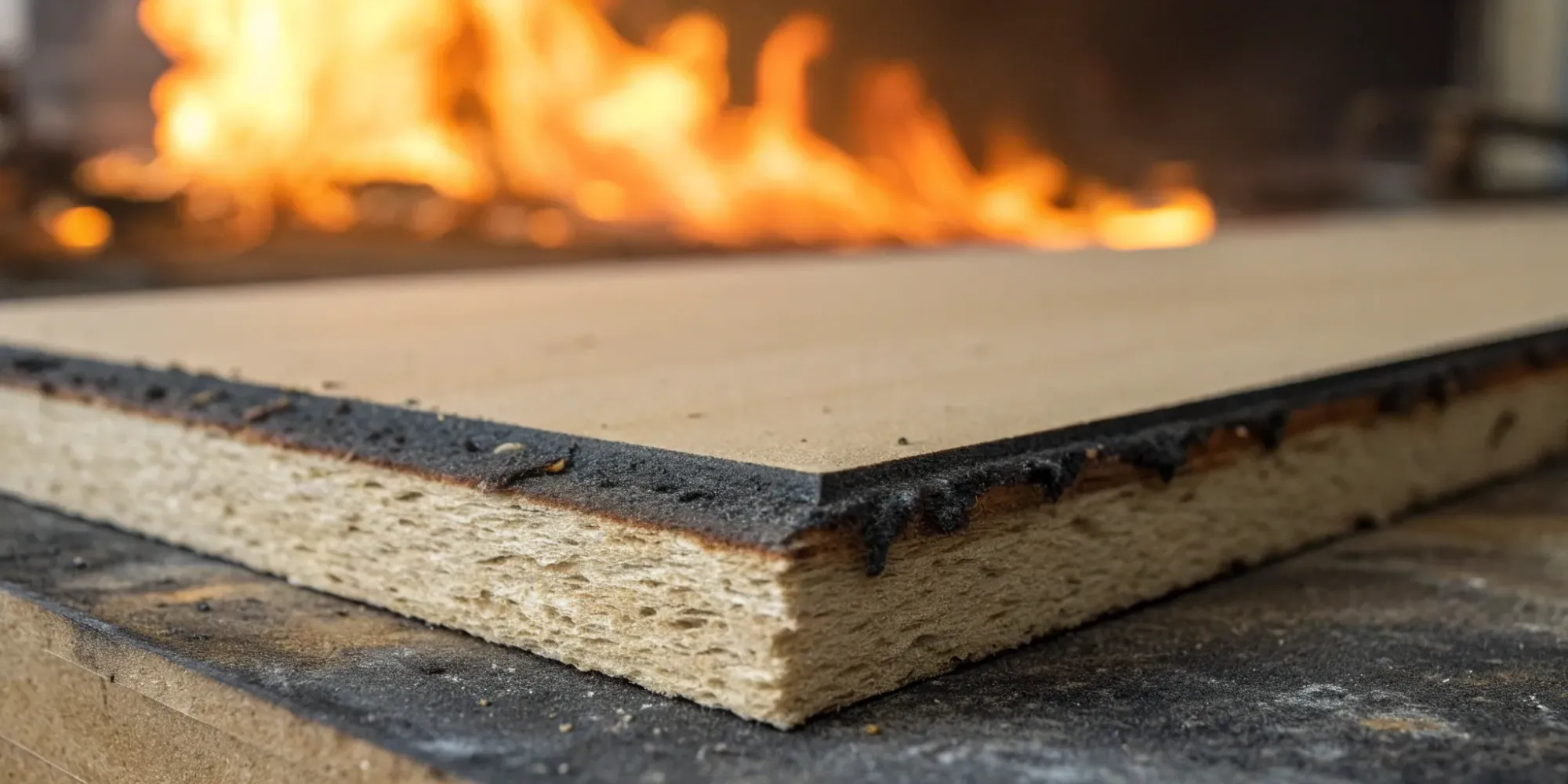
Is Standard MDF Fire Resistant? The Honest Answer
October 1, 2025 · 28 min read
You’re in the lumber aisle, weighing your options: standard MDF or the pricier fire-retardant version. The cost savings are tempting, but what are you really giving up? It all comes down to one critical question: is standard MDF fire resistant in a way that truly matters for safety? This decision impacts more than your budget—it affects your ability to pass inspections and protect your home. This guide cuts through the confusion, explaining exactly how each material performs under heat so you can make a confident, informed choice for your project.
WiserBuild CTA ButtonWiserBuild CTA Button
Key Takeaways
- Know the fundamental difference between MDF types: Standard MDF is a combustible wood product that will act as fuel in a fire. Fire-retardant (FR) MDF is chemically treated during manufacturing to significantly slow the spread of flames and reduce smoke.
- Verify your project's requirements before you build: Local building codes and insurance carriers often mandate fire-rated materials, especially in commercial spaces or high-risk areas. Check these rules first to ensure your project passes inspection and qualifies for coverage.
- Proper installation and finishes are critical for safety: A material's fire resistance depends on the entire assembly. Always seal joints with fire-rated caulk, and for standard MDF, apply intumescent paint to create a protective barrier that swells when exposed to heat.
MDF and Fire Safety: What's the Real Story?
Medium-density fiberboard, or MDF, is one of the most common materials you’ll find in modern homes. It’s used for everything from kitchen cabinets and shelving to decorative trim. Because it’s so versatile and affordable, it’s a go-to choice for many builders and designers. But when you’re building a home designed to be safe and resilient, especially in an area prone to wildfires, you have to ask the tough questions. How does a material like MDF actually perform when exposed to fire?
Understanding the basic makeup of standard MDF is the first step in making an informed decision for your project. Let’s break down what it is, how it’s made, and what that means for its fire resistance.
So, What Exactly Is MDF?
At its core, MDF is an engineered wood product. Think of it as a panel created by breaking down hardwood or softwood residuals into fine wood fibers. These fibers are then mixed with a resin binder (essentially a strong glue) and wax, and formed into panels by applying high temperature and pressure. The result is a very dense, smooth, and uniform board that doesn't have the knots or grain patterns you see in solid wood. This consistency is what makes it so easy to machine and finish, leading to its popularity in cabinetry and furniture.
From Fiber to Board: How MDF Is Made
The manufacturing process for MDF is what gives it its signature smooth and stable characteristics. After the wood fibers are combined with resin, the mixture is pressed into a thick mat. This mat goes through a series of hot presses that compress it to its final thickness and activate the resin, binding the fibers together permanently. The process creates a strong, solid panel that can be cut and shaped with precision. It’s also during this production stage that additives can be introduced. For example, fire-retardant chemicals can be injected along with the resin to create a specialized, fire-rated version of MDF.
Understanding the Makeup of Standard MDF
So, what does this composition mean when it comes to fire? Standard MDF is made from wood fibers and resin, which makes it inherently combustible. It is not fireproof. While its density means it may char and resist ignition slightly longer than a lightweight wood, it will eventually catch fire and burn. Because it’s a wood-based product, it will contribute fuel to a fire and produce smoke once it ignites. This is a critical factor to consider when selecting materials, as building codes and insurance requirements often have strict rules about where combustible materials can be used.
The Big Question: Is Standard MDF Fire Resistant?
Let's get straight to the point: standard Medium Density Fiberboard (MDF) is not fireproof. Because it’s made from wood fibers, it is a combustible material. While its dense structure gives it a slight advantage over raw lumber in terms of how quickly it will ignite, it will absolutely burn when exposed to a sustained flame or high heat. This is a critical distinction for anyone designing or building a home, especially in an area where wildfire risk is a constant concern.
Understanding the properties of common building materials like MDF is the first step toward creating a home that is both safe and compliant. Building codes are in place specifically to manage how materials like MDF are used, limiting them in areas where fire spread is a major risk. For your project to be approved and, just as importantly, insurable, you need to know the limitations of the standard products you might pick up at the hardware store. While fire-retardant versions of MDF exist, it’s essential to first understand exactly what you’re working with when you use the standard variety.
How Standard MDF Reacts to Flames
While standard MDF is not fireproof, it does have a small degree of fire resistance simply due to its density. It won't catch fire as quickly as a piece of cardboard or a pile of sawdust. When first exposed to flame, it will char on the surface, which can briefly slow the fire's penetration. However, this resistance is minimal and short-lived. With continued exposure to heat, the material will ignite and burn steadily.
Think of it this way: standard MDF will eventually act as fuel for a fire, not a barrier against it. This is why you will never find standard MDF used in fire-rated building assemblies, such as the walls separating an attached garage from your living space or in commercial exit corridors. It simply doesn't meet the performance standards required to hold back flames and protect escape routes.
Comparing MDF to Other Wood Products
So how does standard MDF stack up against other common wood products like plywood or oriented strand board (OSB)? When it comes to fire, they’re all in the same boat. Because they are all made from wood, they are inherently combustible materials that will act as fuel in a fire. While the high density of MDF might cause it to char and resist ignition for a few moments longer than a lighter material, it will eventually catch fire and burn. This is where fire-retardant MDF stands apart. It’s chemically treated to significantly slow the spread of flames and reduce smoke, earning it a much higher fire safety classification. For this reason, building codes often require fire-rated materials in specific areas, making the choice between standard and fire-retardant MDF less about preference and more about compliance and safety.
Why Does Standard MDF Burn?
The reason standard MDF burns is rooted in its basic composition. The material is an engineered wood product made from fine wood fibers, which are then mixed with resin and wax and pressed into dense, flat panels under high heat and pressure. Both of these primary ingredients—wood fibers and synthetic resin—are organic materials, which makes them inherently combustible.
While the manufacturing process creates a dense, uniform board without the knots or grain of solid wood, it doesn't remove the fundamental flammability of its components. The resins used as a binder will also burn and can contribute to the smoke produced. This inherent combustibility is why standard MDF is not considered a fire-rated material and its use is restricted by building codes in applications where fire safety is a primary concern.
Heat and Smoke: What to Expect from Burning MDF
Once standard MDF ignites, it contributes a significant amount of fuel to a fire, increasing the overall heat and helping the flames spread to other materials. But for anyone inside a building, the more immediate danger is often the smoke. When MDF burns, the combination of wood fibers and binding resins releases a thick, dense, and often toxic smoke.
This smoke can quickly reduce visibility to near zero, making it incredibly difficult to find an exit. Furthermore, the fumes can contain harmful chemicals like carbon monoxide and formaldehyde, posing a severe health risk. In a fire, smoke inhalation is a leading cause of injury and death, which is why fire safety regulations place such a strong emphasis on limiting materials that produce excessive smoke. The performance of standard MDF in this regard makes it unsuitable for many interior applications without additional protective finishes.
Standard vs. Fire-Retardant MDF: A Side-by-Side Comparison
At first glance, standard and fire-retardant MDF look nearly identical. They’re both engineered wood panels used for everything from cabinetry to wall paneling. But when it comes to fire safety, they are fundamentally different materials. The choice between them isn't just about preference—it's a critical decision that impacts your home's safety, your ability to meet building codes, and even your insurance coverage.
Understanding the distinction comes down to four key areas: how they’re made, how they perform under heat, how much they cost, and how they should be installed. Standard MDF is a reliable and affordable material for many projects, but it offers no real defense against fire. Fire-retardant (FR) MDF, on the other hand, is specifically engineered to slow the spread of flames and reduce smoke, buying precious time when it matters most. Making the right choice from the start gives you confidence that your project is not only beautiful but also built to protect what’s important.
Comparing the Manufacturing Processes
The key difference between standard and fire-retardant MDF happens long before the panels are ever cut or installed. Standard MDF is made by breaking down wood into fine fibers, mixing them with wax and resin, and pressing them into dense sheets under high heat. Fire-retardant MDF follows a similar process but includes a crucial extra step. During production, special fire-resistant chemicals are injected and bonded directly with the wood fibers.
This isn't just a surface-level coating; the fire-retardant properties are an integral part of the board itself. This specialized manufacturing process ensures that every part of the panel, from the core to the surface, is designed to resist combustion. It’s this built-in protection that gives FR MDF its reliable safety performance.
The Role of Fire-Retardant Additives
So what’s the secret behind fire-retardant MDF? It all comes down to special chemical additives that are integrated during the manufacturing process. This isn’t just a surface-level paint or coating that can get scratched off. Instead, these fire-resistant compounds are mixed right in with the wood fibers and resin, making the protection a core part of the material. That means you can cut, drill, or shape the panel, and its fire-retardant properties stay completely intact. This built-in defense is what gives FR MDF its reliable performance when every second counts.
You don’t need a chemistry degree to understand how these additives work. When exposed to intense heat, they trigger a chemical reaction that actively fights the fire in two key ways. First, some additives release water vapor, which helps cool the material and dilutes the flammable gases that a fire needs to grow. Second, others swell up to form a thick, black layer of carbon char on the surface. This char acts like an insulating blanket, shielding the wood fibers underneath from the heat. This powerful protective mechanism is what dramatically slows down combustion.
This clever chemistry results in a material that behaves predictably when things get hot. It significantly slows the spread of flames, produces less smoke, and holds its shape longer than standard wood products. This reliable performance is what allows FR MDF to earn a Class A fire rating, making it a required material for many commercial buildings and a smart choice for homes in high-risk areas. Selecting materials with verified safety ratings isn't just about passing an inspection; it's a foundational step in building a resilient home that insurance carriers will see as a lower risk.
Performance and Safety: A Head-to-Head Look
When exposed to flames, the difference between these two materials becomes clear. Standard MDF will ignite relatively quickly and can contribute to the rapid spread of a fire. In contrast, fire-retardant MDF is engineered to significantly slow the spread of flames. It’s designed to char rather than burn, which helps contain the fire and reduces the amount of smoke produced.
This delay is incredibly important. By taking much longer to ignite, FR MDF gives occupants more time to escape a building safely and provides a larger window for firefighters to arrive and control the situation. This superior performance is why it’s often required by building codes in commercial spaces, multi-family residences, and homes located in high-risk areas.
Improved Strength and Durability
Beyond its obvious fire safety advantages, fire-retardant MDF has another benefit that might surprise you: it's often stronger and more durable than its standard counterpart. The chemical treatment process doesn't just inhibit flames; it also creates a denser, more resilient board. These additives bond with the wood fibers, enhancing the panel's overall structural integrity. This means FR MDF can be a great choice for high-traffic areas or applications where longevity is key, like custom cabinetry or wall paneling. You're not just investing in safety, but also in a material that's built to last.
Important Structural Limitations
It's crucial to remember that standard MDF offers no real protection in a fire. Because it's made of wood fibers and resin, it is a combustible material that will act as fuel for the flames, not a barrier against them. Once it ignites, it loses all structural integrity. This is why you'll never see standard MDF used in critical safety applications like fire-rated walls. It simply cannot meet the performance standards required to contain a fire or protect escape routes for your family. This limitation is a major reason why building codes strictly regulate its use, making it essential to choose the right material from the start.
What's the Price Difference?
There’s no getting around it: fire-retardant MDF costs more than its standard counterpart. The higher price tag is a direct result of the specialized manufacturing process and the addition of fire-retardant chemicals. While it might be tempting to opt for the less expensive option, it’s helpful to think of the extra cost as an investment in safety and resilience.
Using a fire-rated wood product where required ensures your project meets legal building codes, which is essential for passing inspections and securing insurance. In the long run, investing in compliant, safer materials can protect you from the far greater costs associated with fire damage, liability, and the challenges of getting your property properly insured.
Key Differences in Installation
Installing fire-retardant MDF is similar to working with standard MDF, but a few extra considerations will ensure you get the full safety benefit. While the board itself is fire-resistant, you can enhance its performance by using compatible finishes. Applying fire-resistant primers and paints adds another layer of protection. For areas with the strictest fire codes, using intumescent paints is a great choice, as they swell up when heated to form a protective, insulating barrier.
Always follow the manufacturer’s specific guidelines for cutting, fastening, and finishing the panels. Using the right techniques ensures the material’s fire-retardant properties aren’t compromised, keeping your installation compliant and safe.
Staying Compliant: MDF and Building Codes
Choosing between standard and fire-retardant MDF isn't just about performance—it's about meeting legal requirements and ensuring your project is safe and insurable. Building codes are in place to protect lives and property, and they set clear expectations for the materials you can use, especially in commercial buildings or homes in high-risk areas. Using a non-compliant material like standard MDF where a fire-rated one is required can lead to failed inspections, costly rework, and significant safety hazards.
More importantly, these choices directly impact your ability to get insurance. Insurers evaluate risk, and a structure built with the wrong materials is a much higher risk. By selecting materials that meet or exceed code, you’re not just following the rules; you’re making a smart investment in your property’s long-term safety and financial viability. Understanding these standards before you build is the best way to ensure your project goes smoothly from blueprint to final sign-off.
Understanding International Building Code (IBC) Rules
The International Building Code (IBC) sets the baseline for construction safety across the country, and it has specific rules about fire resistance. For public buildings, multi-family homes, and critical areas like corridors and kitchens, the code often requires materials with a proven fire rating.
In these applications, standard MDF simply won’t cut it. Its high combustibility means it can’t meet the safety thresholds outlined in the code. Opting for fire-retardant MDF in these situations is essential for passing inspections and, more importantly, for creating a safe environment for everyone who will use the space. Using the correct materials from the start helps you avoid compliance issues that could derail your project.
Decoding NFPA Fire Safety Guidelines
Beyond local and international building codes, the National Fire Protection Association (NFPA) provides critical guidelines that shape fire safety standards. The NFPA’s mission is to reduce death, injury, and property loss from fire, and their standards influence everything from building design to material selection.
Fire-retardant MDF is engineered specifically to align with these safety principles. Its chemical composition is designed to slow the spread of flames and reduce smoke production, giving people more time to evacuate during a fire. Following NFPA guidelines isn’t always a direct legal requirement, but it’s a best practice that demonstrates a commitment to safety and is often looked upon favorably by insurers and code officials.
Understanding Fire Safety Ratings and Standards
When you’re selecting materials, you’ll come across terms like "fire-rated" or "Class A," but these labels can be confusing without context. Fire safety isn't a simple pass/fail grade; it’s a detailed system of ratings and standards that describe exactly how a material performs under specific conditions. Understanding this language is essential for making choices that not only meet building codes but also create a genuinely resilient home. Let’s break down what these terms actually mean and the standards that govern them, so you can feel confident you’re choosing the right products for your project.
Reaction to Fire vs. Fire Resistance Explained
It’s easy to use these terms interchangeably, but "reaction to fire" and "fire resistance" describe two very different things. Reaction to fire measures how a single material behaves when exposed to flames. It answers questions like: Does it ignite easily? Does it contribute fuel to the fire? How much smoke does it produce? Standard MDF has a poor reaction to fire because it’s a combustible wood product that will act as fuel. In contrast, fire-retardant MDF is chemically treated to have a much better reaction, meaning it’s designed to significantly slow the spread of flames and reduce smoke.
Fire resistance, on the other hand, refers to the ability of a complete building assembly—like an entire wall, floor, or door system—to contain a fire and stop it from spreading for a specific amount of time. This is usually measured in minutes (e.g., a 30- or 60-minute fire rating). A material’s reaction to fire is just one part of this equation. A fire-resistant wall depends on the combination of all its components, including studs, insulation, and fasteners, all working together to hold back the fire.
International Fire Safety Standards
To ensure consistency and safety, building materials are tested against established standards. In the United States, the International Building Code (IBC) is the primary model code that local jurisdictions adopt. The IBC specifies where fire-rated materials must be used, particularly in commercial buildings, multi-family housing, and critical areas like exit corridors. These rules are why standard MDF is prohibited in many applications, while FR MDF is often required to meet compliance.
Other parts of the world use similar systems. The European standard, EN 13501-1, classifies a material’s reaction to fire on a scale from A1 (non-combustible) to F (easily flammable). Fire-retardant MDF typically earns a rating of B or C, indicating it has a very limited contribution to fire. Understanding which standards apply to your project is a critical first step. A service like WiserBuild can review your plans to confirm your material choices align with local codes and insurance requirements, preventing costly mistakes before construction even begins.
Don't Forget Your Local Building Codes
While the IBC and NFPA provide a great framework, your local building codes are the ultimate authority. Municipalities and states, especially those in wildfire-prone areas, often adopt stricter rules based on their specific risks. It’s your responsibility to know exactly what’s required for your project in your location.
Before you purchase materials, contact your local building department to confirm the fire-resistance ratings needed. It’s also important to remember that even FR MDF has its limits. It is not completely fireproof and should not be used in exterior or wet applications, as moisture can degrade its fire-retardant properties. Always verify that your intended use aligns with both the manufacturer’s specifications and your local code.
How to Verify MDF Fire Ratings and Certifications
How can you be sure the MDF you’re buying is actually fire-retardant? Look for official markings and documentation. True FR MDF is manufactured to meet specific fire safety standards and undergoes rigorous third-party testing.
Manufacturers often add a red or pink dye to the material for easy identification on a job site. More importantly, the product should be stamped or labeled with its fire-resistance classification, such as a Class A or Class 1 rating. This certification confirms that the material has been tested and performs as expected in a fire. Always check the product data sheets to verify its ratings before installation to ensure you’re building with a compliant and safe material.
Choosing the Right MDF for Your Space
Choosing between standard and fire-retardant MDF isn’t just about picking a material; it’s about matching the product to the project’s specific risks and requirements. The right choice depends entirely on where and how you plan to use it. For a simple picture frame in a low-risk home, standard MDF is perfectly fine. But for wall paneling in a restaurant or cabinetry in a home located in a wildfire-prone area, the decision carries much more weight.
Making the right call from the start helps you meet building codes, satisfy insurance requirements, and, most importantly, create a safer environment. Think of it as a foundational step in risk management. Using a fire-retardant material where it’s needed can be the difference between a minor incident and a major disaster, and it’s a detail that both inspectors and insurers will be looking for. Let’s break down the common applications so you can feel confident in your selection.
Common Product Specifications
Once you’ve decided that fire-retardant MDF is the right choice for your project, the next step is understanding the practical details. Knowing the common specifications will help you plan your design, order the correct amount of material, and ensure it meets other important criteria, like environmental standards. These details are just as important as the fire rating itself, as they affect everything from the structural integrity of your build to its overall environmental impact. Getting familiar with these specs ensures you’re making a well-rounded decision that aligns with all of your project’s goals.
Available Sizes and Thicknesses
Fire-retardant MDF is designed to be a direct substitute for standard MDF in many applications, so it comes in similar dimensions. You can typically find it in large sheets, with common sizes being 4 feet by 8 feet or 4 feet by 10 feet. The thickness also varies to suit different needs, from thinner 1/2-inch panels perfect for decorative overlays to more robust 3/4-inch boards ideal for cabinetry and shelving. These standard dimensions make it easy to incorporate into plans without having to rework your entire design. Always confirm the available stock with your supplier before finalizing your cut list.
Health and Environmental Certifications
Safety isn't just about fire resistance; it's also about the health of your home's environment and the planet. Many reputable manufacturers of FR MDF offer products with environmental certifications. For example, look for an FSC® certification, which guarantees the wood fibers come from responsibly managed forests. Additionally, many FR MDF products are made with no-added-formaldehyde (NAF) resins, which significantly improves indoor air quality. Choosing a certified product ensures you’re not trading fire safety for environmental responsibility—you can, and should, have both.
The Growing Demand for Safer Materials
The shift toward fire-retardant materials isn't happening in a vacuum. It's part of a larger movement driven by homeowners, builders, and regulators who are all demanding a higher standard of safety in construction. As awareness grows around the risks of fire, especially in vulnerable regions, so does the expectation that our buildings should be more resilient. This trend is reflected in everything from stricter building codes to the material choices people make for their own homes. It’s a clear signal that safety is no longer an afterthought but a primary consideration in modern design and construction.
This increased demand is fueled by a few key factors. First, governments and local authorities are continuously updating building codes to mandate the use of fire-resistant materials in new construction, particularly in public and commercial spaces. Second, consumers are more informed than ever and are actively seeking out safer, more durable products for their homes and workplaces. This market pressure encourages manufacturers to innovate and make materials like fire retardant MDF more widely available. Ultimately, this trend benefits everyone by creating stronger, more resilient communities that are better prepared to withstand potential disasters.
Best Uses for MDF in Your Home
In many residential settings, standard MDF is a go-to for projects like decorative trim, furniture, and shelving. However, if you’re building or renovating in a high-risk area or working on a multi-family building with shared walls, upgrading to fire-rated MDF is a smart move. It’s an especially good choice for kitchen cabinetry, built-in storage, and wall panels near potential heat sources. Using a fire-retardant material in these key areas adds a crucial layer of protection for your family and property without changing the look or feel of your design.
MDF Applications in Commercial Buildings
Commercial buildings like offices, retail stores, and restaurants operate under strict fire safety regulations. In these environments, fire-rated MDF is often a requirement, not just a recommendation. It’s used for wall partitions, reception desks, display units, and ceiling panels to help contain a potential fire and slow its spread, allowing more time for evacuation. Because these spaces see heavy foot traffic, ensuring all materials meet commercial fire codes is essential for getting your certificate of occupancy and keeping your insurance valid.
Specialized Uses in Public Spaces
Now think about public spaces where safety is the absolute top priority—places like schools, hospitals, theaters, and government buildings. In these high-occupancy environments, a fire can be especially dangerous because getting everyone out safely is much more complex. This is where fire-retardant MDF becomes non-negotiable. It’s specified for everything from wall linings and acoustic panels to custom fixtures and reception areas. Its job is to significantly slow the spread of flames and reduce smoke, giving people critical extra time to evacuate. Using certified fire-retardant materials in these settings isn't just a good idea; it's a fundamental requirement of strict public safety codes that ensures a building is compliant and safe for public use.
When to Use Fire-Retardant MDF
If your project is in a region prone to wildfires or other fire hazards, material selection is one of your most powerful tools for resilience. Standard MDF is combustible and can contribute fuel to a fire, but fire-rated MDF is engineered to resist ignition and slow down combustion. Using it for interior paneling, doors, and cabinetry can significantly reduce the risk of fire spreading throughout a structure. This choice is a critical part of a holistic, fire-wise construction strategy that helps protect your investment and improve the safety of the building’s occupants.
Safety First: Specifying MDF for Public Buildings
Safety is the top priority in public buildings such as schools, hospitals, libraries, and government offices. These structures must adhere to the most stringent fire safety standards to protect large numbers of people. Fire-retardant MDF is specifically designed for these applications. Its specialized manufacturing process ensures it meets the rigorous compliance requirements for public spaces. You’ll find it used in corridors, classrooms, auditoriums, and other common areas where slowing the spread of flames and smoke is critical for a safe and orderly evacuation.
Making MDF Safer: Your Action Plan
While standard MDF is combustible, you aren't without options for improving its fire safety. The most effective strategy is to use fire-retardant (FR) MDF from the start, as it’s engineered specifically to slow the spread of flames. However, if you’re working with standard MDF or want to add another layer of protection, several methods can make a real difference.
Taking these steps isn’t just about safety—it’s also about ensuring your project meets local building codes and insurance requirements. In high-risk areas, especially those prone to wildfires, demonstrating that you’ve used fire-resistant materials and techniques can be critical for getting your plans approved and your property insured. Let’s walk through the most effective ways to make MDF safer.
Using Fire-Retardant Chemical Treatments
The most reliable way to make MDF fire-resistant is to use boards that have been chemically treated during production. This isn't a coating you add later; it's integral to the material itself. The manufacturing of FR MDF is a specialized process that involves injecting the wood fibers with fire-resistant chemicals before they are pressed into boards. This ensures the entire panel, not just the surface, has fire-retardant properties.
Because the treatment is mixed in, the protection remains even if the board is cut, drilled, or sanded. When you’re planning a project, specifying FR MDF from your supplier is the best way to guarantee this level of built-in safety. It provides consistent, reliable performance that surface applications can't always match.
The Role of Fire-Resistant Paints and Coatings
If you’re working with existing standard MDF or want to add protection, fire-resistant coatings are a great solution. These aren't your everyday paints. The most common type is intumescent paint, which looks like regular paint but reacts to heat. When exposed to high temperatures, intumescent coatings swell up to create a thick, insulating char layer. This layer acts as a barrier, slowing heat transfer and protecting the MDF underneath from igniting.
For these coatings to work effectively, you need to apply them correctly. Always follow the manufacturer’s instructions for thickness and application methods. Priming the MDF first can also help the coating adhere properly and enhance its durability. In areas where fire codes are strict, you may need to use specific non-combustible finishes over the primer to ensure full compliance.
Proper Installation for Better Fire Safety
Even the highest-quality fire-retardant materials can fail if they aren't installed correctly. Fire-rated MDF is an engineered building material designed to provide enhanced safety, but its performance depends on the entire assembly. Pay close attention to the manufacturer's installation guidelines, as they are designed to maximize the material's fire-resistant capabilities.
One of the most critical steps is properly sealing all joints, seams, and edges. These are the weakest points where flames and hot gases can penetrate a wall or ceiling. Use fire-rated sealants or caulking to fill any gaps. Additionally, make sure you’re using the right fasteners and adhesives, as standard products can fail in a fire and compromise the structure. Following these best practices ensures the entire system works together to resist fire effectively.
Simple Maintenance for Lasting Safety
Once your project is complete, fire safety becomes a matter of ongoing maintenance. It’s important to remember that fire-resistant properties can be compromised over time, especially if the materials are damaged. Regular inspections are key to ensuring your MDF installations remain as safe as the day they were installed.
Look for any cracks, chips, or deep scratches, particularly on surfaces treated with fire-resistant coatings. If the protective layer is broken, the combustible MDF underneath is exposed. If you find any damage, repair it promptly according to the coating manufacturer’s instructions. Regular maintenance is essential for long-term protection and helps ensure your building remains compliant with fire codes and attractive to insurers.
Ensuring Your Project Is Approved and Insured
Choosing the right materials is a huge step, but it’s only part of the puzzle. To get your project across the finish line, you need to show building officials and insurance carriers that you’ve built a safe, compliant structure. This means thinking ahead and making sure every decision supports your goal of a fully approved and insurable home. A little planning here goes a long way in preventing frustrating delays and unexpected costs that can derail your timeline and budget. It’s about building not just a beautiful home, but a resilient one that everyone from the local inspector to your insurance underwriter can stand behind with confidence.
Successfully getting your project signed off on involves more than just following the blueprints. It requires hiring the right team, creating a solid safety plan, understanding what your insurer needs to see, and keeping track of everything along the way. By focusing on these key areas, you can streamline the approval process and give yourself peace of mind, knowing your home is protected and properly covered. Let’s walk through the practical steps you can take to make that happen, ensuring your hard work pays off with a home that’s both safe and secure for years to come.
Why You Should Hire Certified Contractors
The success of your project often comes down to the people you hire. Working with certified and experienced contractors is essential, especially in high-risk areas. A qualified professional won’t just install materials correctly; they’ll understand why certain choices matter. They’ll know that using fire-retardant MDF in critical areas like doors and walls can help prevent a fire from spreading, potentially saving your property and, more importantly, keeping your family safe. A great contractor serves as your first line of defense, ensuring that every part of your build meets the highest safety standards and aligns with local code requirements. Their expertise helps you avoid common pitfalls that could lead to failed inspections or denied insurance claims.
Setting Up On-Site Safety Protocols
Before the first wall goes up, you should have a clear, documented safety plan. This plan should outline the specific measures you’re taking to mitigate fire risk, including your choice of materials. For example, your building plans can specify that fire-rated MDF will be used in hallways, kitchens, and around electrical panels. This material is manufactured with additives that slow ignition and the spread of flames, making it a key component of your home's defense system. By establishing these protocols upfront, you create a clear roadmap for your construction team and provide tangible proof to inspectors and insurers that you’ve prioritized safety from day one. It shows you’ve been thoughtful and proactive, which can make all the difference during the review process.
What Your Insurance Company Needs to See
Insurability should be on your mind from the very beginning of your project. Insurance companies, particularly in wildfire-prone regions, have become increasingly strict about the homes they are willing to cover. Many have specific requirements for building materials, and failing to meet them could leave you without coverage. Building codes and insurers often mandate the use of fire-rated materials in high-risk areas, so using products like fire-retardant MDF isn’t just a good idea—it’s often a necessity. Before you build, talk to your insurance agent to understand their requirements for new construction or major renovations. Aligning your project with their guidelines from the start is the best way to ensure you can get the coverage you need.
The Importance of Keeping Detailed Records
Think of documentation as your project’s resume. It’s the proof you need to back up all the smart decisions you’ve made. Keep a detailed file with receipts, product specification sheets for materials like FR-MDF, and photos of the installation process. This paper trail demonstrates that you’ve met all regulatory and insurer requirements. When an inspector asks what’s behind the drywall or an insurance underwriter questions your home’s fire resilience, you’ll have the records to prove it. Meticulous documentation makes the final approval process much smoother because it eliminates guesswork and provides clear evidence of compliance. It’s a simple step that can save you from major headaches later on.
Making the Final Call: Which MDF Is Right for You?
Picking the right materials can feel like a high-stakes decision, because it is. The type of MDF you choose affects not only your project's budget and timeline but also its long-term safety and ability to meet code. This isn't just about aesthetics; it's about building something that is compliant, insurable, and resilient, especially if your project is in a high-risk area.
Making the right choice doesn’t have to be complicated. It comes down to a few key questions about your project’s specific needs. By walking through the risks, performance requirements, and budget, you can confidently select the right material. Think of it as a simple framework for making a smart, safe decision that will protect your investment and, more importantly, the people who will use the space. Let’s break down how to choose the best MDF for your job.
First, Assess Your Project's Fire Risk
First things first: where and how will the MDF be used? The answer to this question is the single most important factor in your decision. Standard MDF is made from wood fibers and resin, which means it’s naturally combustible. For a small, decorative project in a low-risk setting, it might be perfectly fine. But if you’re planning to use it for wall paneling, cabinetry in a commercial space, or any structural component in a home located in a wildfire-prone area, you need to think differently. Always start by consulting your local building codes, as they will often specify exactly where fire-rated materials are mandatory.
Set Your Material Selection Criteria
If your risk assessment points toward needing a safer option, your best bet is fire-retardant (FR) MDF. This isn't your standard fiberboard; it's specifically engineered with chemical additives that slow ignition and reduce the spread of flames. When you're sourcing materials, you can often identify FR MDF by a red or pink dye integrated into the board. More importantly, look for official fire safety ratings like Class 1/Class A. These certifications aren't just marketing fluff—they verify that the material has passed rigorous testing and meets specific performance standards for flame spread and smoke development.
How to Balance Budget with Safety
There’s no getting around it: fire-retardant MDF costs more than standard MDF. It’s easy to look at the price tag and be tempted to go with the cheaper option, but it’s crucial to think about the total cost of ownership. Spending a bit more upfront on FR MDF is an investment in safety and compliance. It can prevent costly delays from failed inspections or, in a worst-case scenario, provide critical extra minutes for evacuation during a fire. For projects in high-risk zones, using compliant materials can also make it easier and more affordable to secure property insurance.
A Final Checklist for MDF Fire Safety
Remember, "fire-retardant" does not mean "fireproof." FR MDF is designed to slow a fire's growth, not stop it entirely. That’s why proper installation is just as critical as the material itself. Always follow the manufacturer’s guidelines and use recommended fire-resistant fasteners and sealants to maintain the integrity of the system. If you’re working with existing standard MDF, you can improve its performance by applying special fire-retardant coatings or intumescent paints. These products swell up when heated, creating a protective barrier that insulates the wood.
Related Articles
- WiserBuild - Wildfire Resilient Homes & Building Code Compliance
- WiserBuild - Wildfire Resilient Homes & Building Code Compliance
- WiserBuild - Wildfire Resilient Homes & Building Code Compliance
- WiserBuild - Wildfire Resilient Homes & Building Code Compliance
WiserBuild CTA Button
Frequently Asked Questions
Is fire-retardant MDF the same thing as fireproof? No, and this is a really important distinction. "Fire-retardant" means the material is designed to slow down the spread of flames and reduce the amount of smoke it produces. It will char and resist ignition for a specific period, buying you precious time to get out safely. However, it is not fireproof and will eventually burn if exposed to enough heat for long enough. Think of it as a safety feature that improves resistance, not one that offers total immunity.
Can I just use a fire-resistant paint on standard MDF instead of buying the fire-retardant version? While fire-resistant or intumescent paints are a great way to add a layer of protection, they aren't a perfect substitute for true fire-retardant (FR) MDF. The key difference is that FR MDF has fire-retardant chemicals mixed in throughout its entire core. A surface coating only protects the outside. If that coating gets scratched, cut, or damaged, the combustible material underneath is exposed. For new construction where codes require a fire-rated material, you’ll need to use FR MDF to pass inspection.
How can I tell if I’m actually buying fire-retardant MDF? This is a great question because they can look very similar. Manufacturers often add a red or pink dye to their fire-retardant panels to make them easy to identify on a job site. However, the most reliable way to be sure is to look for an official stamp or label directly on the board. This label should specify its fire-resistance classification, such as a Class A or Class 1 rating, which confirms it has been tested to meet specific safety standards.
Why does my insurance company care what kind of MDF I use? Insurance is all about managing risk. When an underwriter looks at your property, especially in a high-risk area, they want to see that you’ve taken steps to reduce the potential for a major loss. Using certified fire-retardant materials where required shows that your home is built to be more resilient. This can make your home more attractive to insure and may even help with your premiums because you’ve actively lowered the risk of a small fire turning into a catastrophic one.
Are the chemicals used in fire-retardant MDF safe to have in my home? Concerns about indoor air quality are completely valid. Reputable manufacturers produce fire-retardant MDF to meet strict safety and environmental standards, including those for formaldehyde and other volatile organic compounds (VOCs). When you're choosing a product, always look at the manufacturer's technical data sheet or safety data sheet (SDS). These documents will provide detailed information on the product's composition and its compliance with indoor air quality standards.