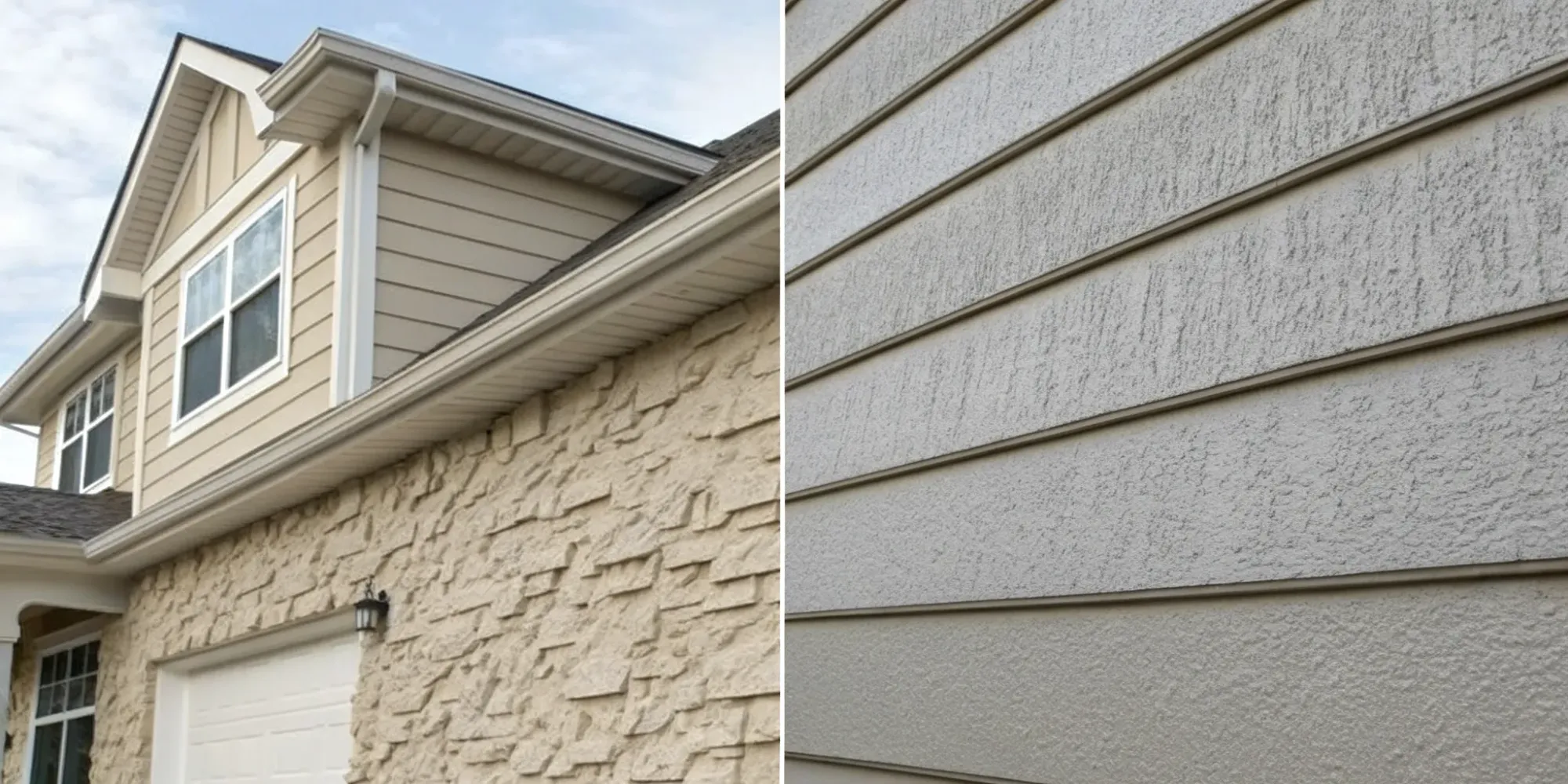
Fiber Cement vs Stucco for Fire: Which Is Best?
February 18, 2026 · 16 min read
Most people think of a wildfire as a giant wall of flames, but the biggest threat to your home often comes from something much smaller: wind-driven embers. These tiny sparks can travel for miles and are relentless in finding any small gap or flammable surface to ignite. Your siding is the primary barrier against this ember attack. That’s why the choice of fiber cement siding vs stucco for fire is so vital. Both materials are noncombustible, but they have different vulnerabilities. One is prone to cracking, creating potential entry points for embers, while the other offers a more seamless, consistent shield. We’ll break down how each material defends against the specific threats of a wildfire, giving you the clarity needed to build a truly resilient home.
Key Takeaways
- Choose Fiber Cement for Consistent Protection: While both materials are noncombustible, fiber cement’s Class A fire rating and resistance to cracking give it a reliability advantage. Stucco is a great fire barrier, but its effectiveness depends on maintaining a crack-free surface.
- Installation and Maintenance Are Non-Negotiable: The best siding material won't protect your home if it's installed with gaps that allow embers to enter. Proper installation and regular upkeep, like sealing joints and repairing cracks, are just as critical as the material itself.
- Your Siding Choice Impacts Your Insurance: Using fire-resistant siding is often required to meet building codes in high-risk zones. This not only makes your home safer but can also make it easier to insure and may qualify you for lower premiums.
Fiber Cement vs. Stucco: Which Siding Is More Fire-Resistant?
When you’re building or remodeling in a high-risk fire area, your choice of siding is one of the most important decisions you'll make. Both fiber cement and stucco are excellent, noncombustible options that far outperform wood or vinyl. But when you look closer, one has a clear advantage in protecting your home from a wildfire.
Fiber cement is a composite material made from cement, sand, and cellulose fibers. This composition is what makes it so tough against flames. In fact, fiber cement siding earns a Class A fire rating, which is the highest possible rating for building materials. This means it won’t ignite when exposed to direct flame and won’t contribute fuel to a fire. For homeowners prioritizing safety, this top-tier rating provides serious peace of mind.
Stucco, a type of cement plaster, is also known for being a great fire barrier. A traditional three-coat stucco system is thick, dense, and does a fantastic job of shielding the structure of your home from heat. However, its effectiveness has a major catch: stucco is prone to cracking over time due to settling or impact. Even small cracks can create a pathway for embers and intense heat to penetrate the siding and reach the flammable materials underneath. The integrity of stucco as a fire barrier depends on a solid, unbroken surface.
So, which is better? While both materials are fire-resistant, fiber cement’s consistent performance and superior rating make it the more reliable choice. It doesn't have the same vulnerability to cracking that stucco does. Plus, many building codes in wildfire-prone areas specifically call for noncombustible siding, and fiber cement easily meets this requirement, simplifying your compliance and building process.
How Do They Perform in a Real Fire?
When you live in a high-risk area, you need to know how your home’s materials will stand up to a real threat, not just how they look on paper. Both fiber cement and stucco are non-combustible, which is a great start. But wildfires aren’t just one big wall of flame; they’re a complex mix of intense heat and flying embers. How each siding material handles these distinct challenges is what really matters for your home's defense.
Your siding is your home’s armor. It’s the first barrier between a fire and the flammable materials inside your walls. While neither fiber cement nor stucco will catch fire, they have different strengths and weaknesses when it comes to maintaining their integrity under extreme conditions. For example, one might be better at deflecting embers, while the other excels at insulating against radiant heat. It's not just about being "fire-resistant"—it's about performing reliably under pressure. A material that cracks or warps can create an entry point for fire, even if the material itself doesn't burn. Understanding these nuances is key to choosing the right protection for your property and family. Let's look at how they perform against the two biggest threats in a wildfire.
Resisting wind-blown embers
Most people picture a massive wall of flames when they think of a wildfire, but the real danger often comes from something much smaller. The primary threat to most homes is a storm of tiny, wind-driven embers that can travel a mile or more ahead of the fire itself. These embers look for any tiny opening or flammable surface to ignite.
Fiber cement provides a solid, seamless defense. Since the panels are non-combustible and installed tightly, they offer no fuel and few gaps for embers to penetrate. Stucco is also an excellent fire barrier, but its effectiveness depends entirely on its condition. Its main vulnerability is cracking. Even small cracks can trap embers, giving them a direct path to the flammable materials in your wall assembly.
Holding up under extreme heat
Direct, radiant heat from a nearby fire can cause materials to warp, melt, or break down, even if they don't ignite. This is where fire ratings become so important. Fiber cement siding holds a Class A fire rating, the highest one available for building materials. This means it’s built to withstand extreme temperatures without losing its structural integrity, providing a durable shield for your home.
Stucco also performs exceptionally well against intense heat, acting as a strong thermal barrier. However, its performance again comes back to its surface integrity. If the stucco has existing cracks, extreme heat can cause them to expand, compromising the protective layer. A solid, unbroken stucco surface is a formidable defense, but any weakness can become a critical failure point when temperatures soar.
Which Siding Better Protects Your Home?
When you’re choosing siding for a home in a high-risk area, fire resistance is non-negotiable. Both fiber cement and stucco are excellent choices known for their durability, but when it comes to pure fire protection, fiber cement often has the edge. Let's break down why one material tends to be the more reliable safeguard for your home and what that means for your peace of mind.
Fiber cement siding earns a Class A fire rating, which is the highest level of fire resistance a building material can receive. This means it’s exceptionally good at withstanding intense heat without igniting. In a wildfire scenario, this quality is critical because it helps prevent flames from spreading to the rest of your home’s structure. It’s made from a mix of cement, sand, and cellulose fibers, creating a noncombustible material that won’t add fuel to a fire.
Stucco is also a fantastic fire barrier. Its dense, cement-based composition does a great job of blocking heat and flames. However, its effectiveness depends heavily on its condition. Over time, stucco can develop cracks from settling or impact. These fissures, even small ones, can become weak points. If a fire occurs, embers and extreme heat can penetrate these cracks, reaching the flammable materials underneath and compromising the entire wall assembly.
This difference is why many building codes in wildfire-prone areas specifically call for noncombustible siding. While both materials are noncombustible, fiber cement’s consistent, crack-resistant surface makes it a more dependable choice for meeting these stringent safety standards. So, while stucco offers solid protection, fiber cement’s superior fire rating and structural integrity give it a clear advantage for homeowners who want the most reliable defense against fire.
Proper Installation for Fire Resistance
Choosing a fire-resistant material like fiber cement or stucco is a great first step, but it’s only half the equation. The truth is, installation matters as much as the material. A perfect installation creates a seamless shield that protects the vulnerable parts of your home’s structure. On the other hand, a sloppy job can leave your home exposed to embers and extreme heat, completely undermining the benefits of your chosen siding.
Think of your siding as your home’s armor. If there are chinks in that armor, it can’t do its job effectively. That’s why paying close attention to the details during installation is non-negotiable for homes in high-risk fire zones. A well-installed siding system is your first line of defense, ensuring there are no weak points for a fire to exploit.
Why sealing gaps is critical
During a wildfire, it’s often not the main wall of flames that ignites a home, but the millions of tiny, wind-blown embers that can travel for miles. These embers are relentless, searching for any small opening to enter and start a fire from the inside. Even the best fire-resistant siding won't protect your home if it's not installed correctly. Gaps or poor sealing around windows, doors, vents, and where the siding meets the foundation can act as an open invitation for these embers. Properly caulking and sealing every joint and penetration point is one of the most critical steps in creating a fire-resistant exterior.
Avoid these common installation mistakes
Both stucco and fiber cement have specific installation requirements that are essential for maximizing their fire resistance. With stucco, the application is everything. Stucco's fire resistance is significantly better when applied in thick, consistent layers according to code. Thin or uneven application creates weak spots that can fail under high heat. It’s also vital to repair any cracks that form over time from settling or weather, as these can compromise the barrier. For fiber cement, installers must follow the manufacturer’s guidelines precisely, ensuring proper overlaps and clearances to prevent creating channels where heat and embers can get trapped.
How to Maintain Your Siding for Fire Safety
Choosing a fire-resistant siding is a huge step toward protecting your home, but it’s not a one-and-done solution. Like any part of your house, your siding needs regular attention to do its job effectively. Over time, weather, shifting foundations, and general wear can create small vulnerabilities that embers can exploit during a wildfire. A little bit of maintenance goes a long way in ensuring your home’s first line of defense remains strong and secure. By staying on top of upkeep, you can keep your siding in top condition and preserve its fire-resistant qualities for years to come.
Upkeep for fiber cement siding
Fiber cement is incredibly tough and earns its Class A fire rating, but it performs best when it’s clean and in good repair. The main goal of maintenance is to prevent flammable debris from building up against the house. Things like dry leaves, pine needles, and twigs can collect in corners or on ledges, giving embers a perfect place to land and ignite. At least twice a year, walk around your home and clear away any debris. While you’re at it, look for any chips, cracks, or damage to the siding panels. Addressing these small issues promptly ensures there are no weak spots that could compromise the material’s integrity during a fire.
Inspecting and repairing stucco
Stucco acts as an excellent fire barrier because it forms a solid, continuous shell around your home. Its biggest weakness, however, is cracking. Cracks can develop from the house settling, extreme temperature changes, or just age. Even a small crack can be an open door for heat and embers to get through the stucco and reach the flammable materials of your home’s structure. Make it a habit to inspect your stucco walls regularly, paying close attention to corners and areas around windows and doors. If you find a crack, it’s important to get it repaired quickly to maintain that seamless, protective layer.
Warning signs your fire resistance is low
Even the best siding material can fail if it isn't installed or maintained correctly. The most common points of failure are the small gaps and seams that can open up over time. Embers are tiny and can get into surprisingly small spaces. Check the areas where siding panels meet and where the siding meets your roof, foundation, windows, and doors. Look for deteriorating caulk that is cracking or pulling away, as this can create entry points. These seemingly minor vulnerabilities are exactly what embers need to bypass your fire-resistant siding. Sealing these gaps is one of the most critical maintenance tasks you can perform.
Comparing the Costs: Fiber Cement vs. Stucco
Choosing the right siding for your home in a high-risk area involves balancing safety, durability, and cost. While fire resistance is non-negotiable, your budget plays a huge role in the final decision. Both fiber cement and stucco offer excellent fire protection, but they come with different price tags—not just on day one, but over the entire life of your home. Understanding the full financial picture, from the initial installation bill to long-term upkeep, is key to making a choice you’ll be happy with for years to come. Let’s break down how these two materials stack up financially so you can plan your project with confidence.
Upfront installation costs
When you look at the initial price tag, stucco is the more budget-friendly option. On average, you can expect to pay between $6 and $9 per square foot for stucco installation. In contrast, fiber cement siding typically has a higher upfront cost, running from $10 to $14 per square foot. For a large project, that difference can add up quickly. If your primary goal is to minimize initial construction expenses while still choosing a fire-resistant material, stucco presents a compelling case. However, it's important to remember that the installation cost is only one part of the financial equation.
Long-term maintenance expenses
This is where the financial story flips. While stucco is cheaper to install, it requires more attention over time. You’ll likely need to repaint it every 5 to 10 years. More importantly, stucco is prone to cracking, which means you'll need to perform regular inspections and repairs to maintain its protective layer. On the other hand, fiber cement is known for its impressive durability. Its factory-applied paint often lasts 15 to 20 years before needing a refresh, and the material itself resists cracking and warping. Over the life of your home, the lower maintenance needs of fiber cement can offset its higher initial price, making it a more cost-effective choice in the long run.
How Does Fire Resistance Affect Your Home Insurance?
Choosing the right siding for your home goes far beyond curb appeal—it’s a critical financial decision that directly impacts your ability to insure your property. Insurance companies are in the business of managing risk. When they see a home built with fire-resistant materials like fiber cement or stucco, they see a lower risk of a catastrophic loss, especially in wildfire-prone regions. This isn't just a minor detail on a long application; it's a fundamental factor in how they calculate your premiums and even whether they’ll offer you a policy at all.
For homeowners in high-risk areas, using fire-resistant materials is often the key to securing coverage. Insurers are increasingly looking for proactive measures, and demonstrating that your home is built to withstand a fire can make all the difference. This process, often called home hardening, involves using construction materials and design features that make a home more resistant to ignition. By choosing siding that won’t easily burn, you’re not just protecting your house—you’re showing insurers that you’re a responsible partner in mitigating risk, which can lead to very real financial benefits.
Can fire-resistant siding lower your premiums?
Yes, it absolutely can. Think of it from an insurer's perspective: a home that is less likely to catch fire is less likely to result in a total-loss claim. To encourage this type of construction, many insurance companies offer discounts for homes built with fire-resistant materials. Using fiber cement or stucco siding can lead to lower insurance costs, with some providers offering premium reductions between 5% and 15%. Before you build or renovate, it’s always a smart move to call your insurance agent and ask what specific materials and fire-resistance ratings qualify for a discount. This simple conversation can help you save money for years to come.
Meeting insurance rules in high-risk zones
In some areas, having fire-resistant siding isn't just about getting a discount—it's about being able to get insurance at all. In regions with a high risk of wildfires, building codes often mandate the use of noncombustible siding to ensure homes are better protected. For insurance companies, compliance with these local codes is frequently a non-negotiable requirement for issuing a policy. If your home doesn't meet these standards, you could be denied coverage, leaving your largest asset completely unprotected. This makes choosing the right siding a foundational step in safeguarding your home, both physically and financially.
What Do Building Codes Require for Siding?
Think of building codes as the essential rulebook for safe construction. They aren’t just suggestions—they are legally enforced standards designed to protect your home and family. When it comes to siding, these codes are especially focused on fire resistance, dictating which materials you can and can’t use. The rules get even stricter if you live in an area prone to wildfires, where your choice of siding becomes one of the most important decisions you’ll make for your home’s defense.
Rules for the Wildland-Urban Interface (WUI)
If your home is located where development meets natural vegetation, you’re likely in what’s called the Wildland-Urban Interface (WUI). Building codes in these high-risk areas are incredibly specific and often mandate the use of noncombustible siding. This is because wind-blown embers are a primary cause of home ignition during a wildfire, and your siding is the first line of defense. To comply, you’ll need materials that won’t easily catch fire. That’s why options like three-coat stucco and fiber-cement siding are excellent choices that meet the standards for wildfire-resistant construction. They are designed to resist ignition and keep your home safer.
Local fire safety standards to know
Beyond the WUI, specific fire safety standards can vary from one town to the next. It’s crucial to check your local requirements, as they dictate exactly how fire-resistant your siding needs to be. Most building codes require siding systems to pass standardized tests, like ASTM E119 and NFPA 268, which prove they won’t easily catch fire or contribute to spreading flames. This is where material ratings become important. For instance, fiber cement siding holds a Class A fire rating, the highest rating available for building materials. Understanding these local standards ensures your project is not only compliant but also genuinely resilient against fire.
Common Myths About Fiber Cement and Stucco
When you’re making decisions about protecting your home from wildfires, it’s important to separate fact from fiction. Fiber cement and stucco are both excellent, highly-rated materials, but their effectiveness relies on understanding what they can—and can’t—do. Let's clear up a couple of common misconceptions.
Myth: Fire-resistant siding is "fireproof"
It’s a common and understandable mistake to think "fire-resistant" means "fireproof." But the reality is, no home can be completely immune to a wildfire's intense heat. The goal is to build a home that can resist ignition for as long as possible. Choosing non-combustible siding like fiber cement or stucco dramatically increases your home's chances of survival because it won't act as fuel. While stucco is excellent at resisting flames, it isn't completely fireproof and can be compromised under extreme, prolonged heat. Think of these materials as your home's first line of defense—strong and resilient, but not invincible.
Fact: Proper installation and upkeep are everything
Your siding is only as good as its installation. You can choose the best fire-resistant material on the market, but if it’s not installed correctly, your home remains vulnerable. Tiny gaps, improper sealing, or cracks can become entry points for wind-blown embers, which are a primary cause of home ignition during a wildfire. For stucco, it's essential to regularly check for cracks that can develop from settling or weather exposure. You should fix these cracks quickly to maintain a solid, fire-resistant barrier. Proper installation and consistent maintenance are what truly make your siding an effective part of your home's defense system.
Pick the Best Fire-Resistant Siding for Your Climate
So, what’s the final verdict? Both fiber cement and stucco are excellent, fire-resistant choices that are far safer than wood or vinyl siding. The best option for your home comes down to your local climate, building codes, and maintenance preferences.
Think of it this way: your siding is your home’s first line of defense. You want it to be as solid and reliable as possible, especially when facing embers or extreme heat.
When to Choose Fiber Cement
If you live in an area with significant temperature fluctuations, heavy moisture, or seismic activity, fiber cement is often the more straightforward choice. It holds a Class A fire rating, the highest available, meaning it’s built to withstand intense heat without igniting. Because it’s a manufactured product, it’s less prone to the cracking that can affect stucco, ensuring a consistent fire barrier. This is why many building codes in high-risk wildfire zones specifically recommend or require noncombustible siding like fiber cement.
When Stucco Makes Sense
In drier, more stable climates, traditional stucco is a fantastic fire barrier. Its main vulnerability is cracking, which can create openings for embers to penetrate. If you’re confident in your region’s climate stability and are committed to regular inspections and repairs, stucco can provide seamless, effective protection. You might also consider modern systems like Exterior Insulation and Finish Systems (EIFS), which must pass rigorous fire-resistance tests to be approved for construction.
Ultimately, the smartest move is to check your local building codes and consult with fire-safety experts. Your home’s resilience depends on making an informed choice that fits your specific environment.
Related Articles
- Fiber Cement Siding vs Vinyl: Which Is Best?
- 4 Best Non-Combustible Siding Options: A Guide
- 4 Best Fire-Resistant Siding Options
Frequently Asked Questions
If both materials are noncombustible, why is fiber cement considered more reliable? While both materials do an excellent job of resisting flames, stucco has a key vulnerability that fiber cement doesn't: it cracks. Over time, as a house settles or weathers, stucco can develop fissures. Even tiny cracks create a pathway for wind-blown embers to reach the flammable structure of your home. Fiber cement, being a stable manufactured product, maintains a solid, seamless surface that offers more consistent protection against ember intrusion.
Can I just install fire-resistant siding and not worry about it again? Think of your siding as one part of a larger defense system. Choosing a fire-resistant material is a critical first step, but it isn't a "set it and forget it" solution. Regular maintenance is essential to ensure there are no weak points. This means keeping the siding clear of flammable debris like leaves and pine needles, and routinely inspecting for and sealing any gaps around windows, doors, and foundation lines where embers could get in.
Which siding is the more affordable choice? It depends on whether you're looking at the short-term or long-term picture. Stucco generally has a lower upfront installation cost, which can be appealing for a new build or remodel. However, fiber cement often proves more cost-effective over the life of your home because it requires far less maintenance. Its durable, factory-applied finish lasts longer, and it doesn't have the same need for crack repairs that stucco does.
Will choosing one of these sidings actually help me get home insurance? Yes, it can make a significant difference, especially if you live in a high-risk area. Insurance companies base their decisions on risk, and a home with noncombustible siding is a much safer bet for them. Using a material like fiber cement or stucco can lead to lower annual premiums. In some wildfire-prone zones, having compliant, fire-resistant siding isn't just for a discount—it's a requirement to get coverage at all.
My contractor can install either siding. What should I look for to ensure it's done right for fire safety? Proper installation is just as important as the material itself. For stucco, the key is a thick, continuous application with no weak spots, as its integrity is its strength. For fiber cement, the installer must follow the manufacturer's guidelines precisely, ensuring every seam, joint, and edge is perfectly sealed. The ultimate goal for both is to create an airtight barrier with absolutely no gaps where embers could penetrate.