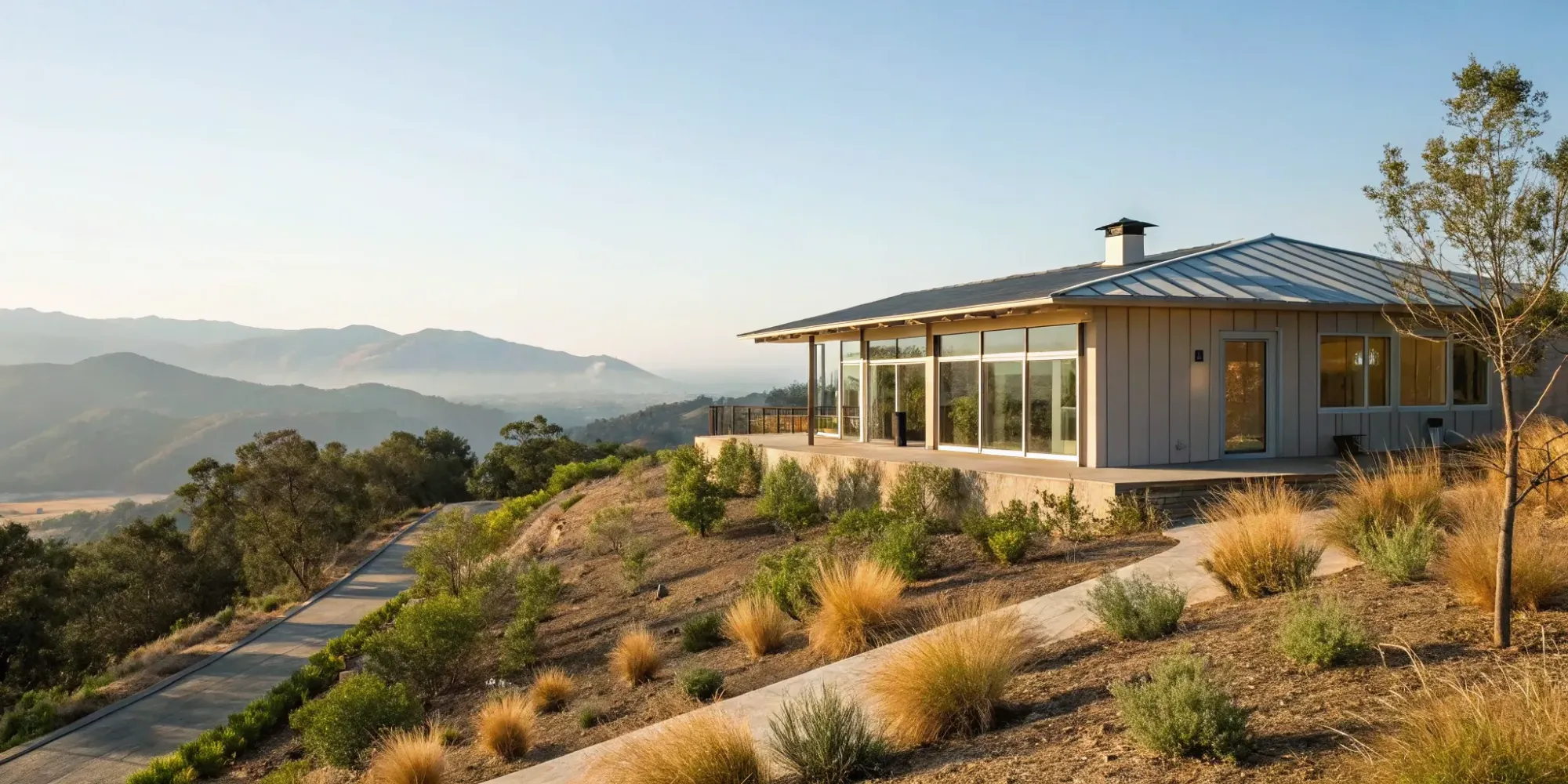
Fire-Resistant Homes California: An Essential Guide
February 10, 2026 · 21 min read
When people hear “fire-resistant home,” they often picture a stark, windowless fortress that costs a fortune to build. Let’s clear the air: that’s a myth. Modern building science has given us an incredible range of beautiful, effective, and surprisingly affordable materials that can protect your home without sacrificing style. You don’t have to choose between a home you love and a home that’s safe. The key is knowing which choices make the biggest impact. This article will bust the common myths and show you the practical realities of designing and constructing fire-resistant homes in California, so you can move forward with confidence.
Key Takeaways
- Prioritize a Non-Combustible Exterior: A home's ability to survive a wildfire starts with its outer shell. Focus on using Class A roofing, ignition-resistant siding, and fire-rated windows to build a solid defense against wind-blown embers and radiant heat.
- Eliminate Entry Points for Embers: The biggest threat is often tiny embers finding a way inside. Systematically seal all gaps on your home's exterior, install fine-mesh vents, and maintain a five-foot, non-combustible zone around your foundation to deny fire an easy entry point.
- Secure Your Insurability and Savings: A fire-resistant home is more attractive to insurers. Keep detailed records of every upgrade—from receipts to photos—and present them to your agent to secure better coverage and potential discounts.
What Makes a Home Fire-Resistant (And Why It Matters in California)
When we talk about building a home that can stand up to a wildfire, we’re not talking about a fireproof bunker. Instead, the goal is to build a fire-resistant home—one that’s designed to slow a fire’s spread and give firefighters a crucial advantage. This approach, often called home hardening, involves using specific materials and construction techniques that make your home a much tougher target for embers and flames.
Think of it as a system. From the roof over your head to the vents in your foundation, every component works together to reduce risk. By making smart choices before you build or renovate, you create a home that’s not only safer for your family but also more resilient and insurable in the face of California’s growing wildfire threat.
What is Fire-Resistant Construction?
A fire-resistant home is built with materials that don’t easily ignite. This starts with a strong frame, often made of steel, and extends to the exterior with non-combustible siding like stucco, brick, or concrete. The roof is one of the most vulnerable areas, so using Class A roofing materials like metal or clay tiles is essential to stop embers from taking hold.
Special features like ember-resistant vents prevent tiny, wind-blown sparks from getting into your attic. Even your windows and doors play a role. Fire-rated windows are designed with special glass and frames that can withstand intense heat for a set period, buying precious time during a fire. It’s about creating layers of defense that make your home less likely to catch fire in the first place.
California's Unique Wildfire Challenge
Living in California means accepting that wildfires are a part of life. But the scale of the threat has changed dramatically. In recent years, we’ve seen fires burn millions of acres, destroying entire communities. Experts compare hardening your home to wearing a seatbelt—it doesn’t guarantee you’ll walk away without a scratch, but it significantly increases the chances of survival.
This escalating risk has also created an insurance crisis. Many carriers are raising premiums or refusing to cover homes in high-risk areas, leaving homeowners with few options. Building a fire-resistant home is no longer just about safety; it’s a critical step in securing affordable insurance and protecting your financial investment for the long term.
Choose the Right Fire-Resistant Materials
When you're building or renovating in a wildfire-prone area, the materials you choose are your home's first line of defense. Think of them as armor. The right choices can dramatically reduce the risk of ignition from flying embers or nearby flames, which is crucial for protecting your family and your investment. This isn't just about meeting building codes; it's about creating a home that can stand up to a real threat.
Selecting fire-resistant materials from the ground up is one of the most effective strategies for wildfire resilience. The goal is to create a non-combustible "shell" for your home. Embers are the primary threat in most wildfires, and they can travel for miles before landing on your roof or getting lodged in a crevice. If your home's exterior is made of materials that won't ignite, you've already won a major part of the battle. This approach, known as home hardening, is recognized by fire officials and insurance companies as a key factor in a home's survivability. Let's break down the most important material choices for your project.
Class A Roofing
Your roof is the most vulnerable part of your home during a wildfire, as it's a prime landing spot for wind-blown embers. That's why choosing Class A rated options is non-negotiable. This is the highest fire-resistance rating a roofing material can get. Materials like metal, clay or concrete tiles, and modern composite shingles are all excellent choices. They are designed to withstand high heat and prevent embers from igniting the underlying structure. An ember that lands on a Class A roof is far more likely to burn out harmlessly than one that lands on an old, combustible wood shake roof. This single choice can make a world of difference.
Non-Combustible Siding and Exteriors
After the roof, your home's exterior walls are the next largest surface exposed to wildfire threats. The key here is to use non-combustible or ignition-resistant materials. Think of options like fiber cement, stucco, and brick—they simply don't burn. These materials act as a shield against the intense radiant heat from a nearby fire and can stop flames from catching onto your walls. While traditional wood siding can be beautiful, it's a significant liability in a fire-prone area unless it has been specifically treated for fire resistance. Making the switch to a non-combustible siding is a foundational step in hardening your home's exterior.
Fire-Rated Windows and Doors
Windows and doors are often the weakest links in a home's defense. The intense heat from a wildfire can cause glass to shatter, allowing embers and flames to enter your home. To prevent this, install dual-paned windows, with at least one pane made of tempered glass. For even greater protection, look for fire-rated windows with frames made of metal or another non-combustible material. These are rated to withstand high heat for specific periods, like 20 or 45 minutes. The same logic applies to your exterior doors. A solid, fire-rated door can effectively block fire from spreading inside, buying critical time for you and for firefighters.
Build Smarter: Key Wildfire-Resistant Construction Methods
Choosing the right materials is a huge step, but how you put them together is just as critical. A home's resilience often comes down to the small details in its construction. During a wildfire, the biggest threat isn't always the main wall of flames—it's the storm of embers that can travel for miles and find tiny openings in your home's exterior.
Smart construction methods focus on sealing these vulnerabilities and creating a solid, continuous barrier against heat and embers. By paying close attention to how your home is assembled, you can significantly reduce the chances of ignition. These techniques are essential for new builds and are often the most impactful upgrades you can make when retrofitting an existing home. Let's look at a few key strategies that make a real difference.
Install Ember-Resistant Vents
Vents are necessary for your attic and foundation, but they can also be open doors for wind-blown embers. Standard vents have openings large enough for these tiny, burning particles to slip through and ignite flammable materials inside. The solution is to install specialized fire-resistant vents designed to block them. These vents are typically covered with a fine metal mesh screen that allows air to flow but stops embers in their tracks. It’s a simple but incredibly effective upgrade that closes off one of your home’s most common entry points for fire.
Seal Gaps and Install Protective Barriers
Think about all the small openings in your home’s exterior: gaps around electrical pipes, utility lines, and exterior plumbing. Each one is a potential pathway for embers and smoke. Sealing these gaps is a crucial step in hardening your home. You can use fire-resistant caulk and other protective barriers to fill these spaces, creating a tight seal that prevents intrusion. Taking the time to meticulously close every crack and crevice ensures your non-combustible siding and other defenses form an unbroken shield, leaving no weak points for a wildfire to exploit.
Consider the Benefits of Steel Framing
While wood is the traditional choice for home framing, it’s also fuel for a fire. For the highest level of structural protection, consider the benefits of steel framing. Steel is a non-combustible material, meaning it won't burn or add to a fire's intensity. Companies specializing in resilient construction often use a steel modular design because it offers superior strength and durability. Beyond its fire resistance, steel is also impervious to pests like termites and won't rot or warp from moisture, making it a smart long-term investment for a safe and resilient home.
How to Retrofit Your Home for Wildfire Safety
If your home was built before recent fire codes were put in place, you might feel like you’re at a disadvantage. But you don’t have to build from scratch to make your home safer. Retrofitting, or "home hardening," involves making targeted upgrades to your existing structure to reduce its vulnerability to wildfires. It’s about systematically identifying weak spots and reinforcing them against the primary threats: embers and radiant heat. By focusing on the right improvements, you can significantly increase your home’s ability to withstand a wildfire, giving you peace of mind and better standing with your insurer.
First, Assess Your Home's Risk
Making an older home fire-resistant can feel like a big project, especially since millions of California homes were built before stricter fire codes for new homes were established in 2008. The first step is to understand your specific vulnerabilities. Start with a thorough walk-around of your property. Look for obvious risks like wood siding, single-pane windows, or open eaves. Pay close attention to the small details: Are your vents covered with a fine mesh screen? Are there gaps around pipes or under doors where embers could slip through? Creating a simple checklist of potential weak points will help you prioritize your retrofitting efforts and decide where to focus your budget for the biggest impact.
Seal Gaps Where Embers Can Enter
During a wildfire, tiny, wind-blown embers are one of the biggest threats to your home. They can travel for miles and find their way into the smallest cracks and crevices, igniting your house from the inside. A critical retrofitting step is to seal these entry points. Carefully inspect your home’s exterior for any gaps around windows, doors, and where pipes or electrical lines enter the walls. Use fire-resistant caulk to fill these openings. Also, check your attic and foundation vents. If they have large openings, cover them with a metal mesh screen (1/8-inch is the standard) to block embers while still allowing for airflow. This is a straightforward and affordable way to harden your home.
Upgrade High-Risk Components
Some parts of your home are more vulnerable than others and may need a complete upgrade. Your roof, siding, windows, and doors are your first line of defense. If you have a flammable wood-shake roof, replacing it with a Class A fire-rated material like asphalt shingles, metal, or tile is one of the most effective changes you can make. The same goes for siding—swap out wood for non-combustible options like stucco, fiber cement, or brick. Also, consider installing fire-rated windows with dual panes and tempered glass, which can resist high heat far longer than standard windows. Fire-rated exterior doors can also prevent flames from spreading inside your home.
Create Defensible Space Around Your Home
What surrounds your home is just as important as how it’s built. Creating defensible space is about managing the vegetation and materials around your house to reduce fuel for a fire. Start with what experts call "zone zero"—the first five feet extending out from your foundation. This area should be completely free of anything that can burn, including mulch, dead leaves, and flammable plants. Use non-combustible materials like gravel or pavers instead. Beyond that, keep firewood piles, propane tanks, and dense brush at least 30 feet away from your home. Regularly prune trees, remove dead vegetation, and keep your lawn mowed and watered. This buffer zone can stop a ground fire from reaching your house.
Meet California's Fire-Resistant Building Codes
Building a home in California means working with some of the most advanced fire-safety codes in the country. While it might seem like a lot to handle, these regulations are your best defense against wildfire. They’re designed to give your home a fighting chance, turning it from a potential casualty into a resilient structure. Understanding these codes is the first step toward building with confidence, ensuring your project is safe, compliant, and insurable from the ground up. Let’s break down what you need to know.
WUI Building Standards
If you’re building in a high-risk area, you’ll hear the term “WUI” a lot. It stands for Wildland-Urban Interface—essentially, any area where homes and wildland meet. California’s WUI building standards are designed to protect homes from the three main ways wildfires cause damage: direct flames, radiant heat, and wind-blown embers, which are the number one cause of home ignition. These codes specify requirements for everything from roofing and siding to vents and windows. They aren’t just arbitrary rules; they’re based on extensive research from organizations like the Insurance Institute for Business & Home Safety (IBHS) to ensure your home is built with proven, fire-resistant methods and materials.
Local Code Requirements
California is one of the few states with such comprehensive, statewide fire-safety regulations. These stringent building codes are not just suggestions; they are mandatory for new construction and major renovations in high-risk fire zones. While there are statewide minimums, your local city or county may have additional requirements based on its specific fire hazard severity. It’s crucial to check with your local building department to understand the exact rules for your property. Following these codes does more than just satisfy a legal requirement—it’s a fundamental part of mitigating risk and protecting your family and investment from the threat of wildfire.
Get a Professional Review to Ensure Compliance
Trying to interpret building codes on your own can feel overwhelming, and a small mistake on paper can lead to big problems during construction. That’s why getting a professional plan review is one of the smartest moves you can make. An expert can analyze your blueprints to confirm every detail aligns with both state and local fire codes, from the materials you’ve chosen to your construction methods. This step provides peace of mind that your home isn’t just compliant but is genuinely designed for maximum safety. A thorough review helps you catch potential issues early, saving you from costly changes and ensuring your project is ready for a smooth approval process.
The Financial Upside of a Fire-Resistant Home
Building a fire-resistant home is about more than just safety—it’s one of the smartest financial decisions you can make as a homeowner in California. Beyond protecting your family and belongings, these construction choices directly impact your insurance, property value, and long-term financial stability. When you invest in resilience, you’re not just building a safer home; you’re protecting your largest asset from risks that are becoming more common every year. Thinking about these financial benefits from the start can help you make choices that pay off for decades to come.
Lower Your Insurance Premiums
In many parts of California, the conversation around insurance has shifted from finding discounts to simply securing coverage. As wildfire risks increase, many insurers are raising prices or even refusing to cover homes in high-risk areas. Building with fire-resistant materials and methods makes your home a much better bet for insurance companies. While some providers offer modest discounts for specific upgrades, the real financial win is maintaining your insurability and avoiding steep premium hikes. A home with documented, code-compliant, fire-resistant features is far more likely to get and keep a good policy.
Protect Your Property's Value
Think of fire-resistant construction like a seatbelt for your house—it dramatically increases its chances of surviving a wildfire. This resilience is becoming a key factor in a home’s market value, especially in at-risk communities. A home that is known to be built with wildfire safety in mind is more attractive to potential buyers who are increasingly aware of these risks. It also signals that the property is insurable, which is a major hurdle in many real estate transactions today. Investing in fire resistance helps in protecting your home's value against both physical damage and market uncertainty.
Weigh the Initial Cost Against Long-Term Savings
It’s true that using fire-resistant materials can sometimes increase upfront construction costs. However, that initial investment is minor compared to the devastating financial—and emotional—cost of rebuilding from the ground up. Spending money to harden your home before a fire is significantly cheaper than recovering after one. While no home can be 100% fireproof, a well-built fire-retardant home gives you a powerful advantage. This proactive approach not only protects your financial investment but also provides invaluable peace of mind, knowing you’ve done everything you can to keep your home standing.
Design a Fire-Resistant Landscape
Building a fire-resistant home is about more than just the structure itself—your yard is your first line of defense. The choices you make in your landscaping can dramatically influence how your property stands up to a wildfire. A well-designed, fire-resistant landscape creates what’s known as “defensible space,” a buffer zone that can slow or even stop a fire from reaching your house. It gives firefighters a safer area to work and reduces the risk of ignition from flying embers, which are a primary cause of home loss during wildfires.
Creating this space doesn’t mean you have to surround your home with concrete or gravel. It’s about making smart, strategic decisions. This involves selecting the right kinds of plants, placing them thoughtfully, and committing to regular maintenance. By thinking of your yard in terms of zones, you can create a beautiful, functional, and safer environment. A fire-smart landscape works in tandem with your home’s fire-resistant features, giving you a comprehensive approach to wildfire protection. It’s an investment that protects your home, your family, and your peace of mind.
Choose and Place Fire-Safe Plants
The right plants can make a huge difference. Some plants, like juniper and cypress, are oily and burn quickly, acting like fuel for a fire. Instead, opt for high-moisture, low-resin plants that are less likely to ignite. Think succulents, lavender, or native perennials that stay green with minimal water. The key is to choose plants that are well-suited to your local climate and won’t become dry tinder.
Placement is just as important as selection. You should keep low-burning plants at least five feet away from your home’s exterior to create an ember-resistant zone. Use non-combustible materials like gravel or pavers in this immediate area. When planting trees, space them so their canopies won’t touch when they’re fully grown. This strategy helps create fuel breaks that can stop a fire from climbing from the ground into the trees and toward your home.
Maintain Your Yard for Fire Safety
A fire-resistant landscape is only effective if you maintain it. Overgrown or dry vegetation can quickly become a serious fire hazard, undoing all your careful planning. Regular upkeep is a simple but critical part of keeping your property safe. Start by making sure your porches, decks, roofs, and gutters are free of leaves, pine needles, and other flammable debris. These areas are prime spots for embers to land and ignite.
Your lawn also needs attention. Water and mow it regularly, and always get rid of the grass clippings. A green, well-kept lawn is much less likely to burn than a dry, brown one. Prune trees to remove dead branches and any limbs that hang over your roof or come within ten feet of your chimney. Consistent yard maintenance is one of the most effective actions you can take to protect your home.
Plan Your Defensible Space in Zones
Think of your yard in three distinct zones, with the most critical area being the one closest to your house. This approach helps you prioritize your efforts and create an effective buffer. The first zone, extending five feet from your home, should be an ember-resistant zone. Keep this area completely clear of flammable plants, mulch, and bark. Use hardscaping like gravel, pavers, or concrete instead. This non-combustible barrier makes it much harder for fire to reach your home’s exterior.
The next zone extends from five to 30 feet out. Here, you can have landscaping, but it should be lean, clean, and green. Plant in small, spaced-out groups, remove all dead vegetation, and keep trees well-pruned. The final zone, from 30 to 100 feet, is your reduced fuel zone. The goal here is to thin out vegetation to slow the spread of fire. Following these defensible space guidelines is a proven way to increase your home’s chances of survival.
Common Myths About Fire-Resistant Homes, Busted
When you're thinking about building or retrofitting a home in a high-risk area, it's easy to get bogged down by misinformation. These common myths can make the process feel overwhelming or even impossible. Let's clear the air and bust a few of the biggest misconceptions about fire-resistant homes so you can move forward with confidence.
Myth: They Limit Your Design Options
One of the most common worries I hear is that a fire-resistant home has to look like a concrete bunker. The good news? That’s completely false. Modern fire-resistant building materials come in a huge range of styles, textures, and colors. You can have beautiful fiber-cement siding that looks just like wood, elegant metal roofing, or stunning stone veneers. You don't have to sacrifice your design vision to build a safer home. In fact, a well-designed, resilient home can be even more beautiful, especially when you factor in the peace of mind and long-term savings from lower insurance and maintenance costs.
Myth: The Cost is Too High
Let's talk about money, because it's a major factor in any building project. While it's true that some fire-resistant materials have a higher upfront cost, the idea that it's always prohibitively expensive is a myth. The cost to harden a home against wildfire can range from a few thousand dollars for basic retrofits to more significant investments for new construction. Think of it as an investment, not just an expense. A resilient home can lead to significant long-term savings through lower insurance premiums and reduced risk of catastrophic loss. Planning ahead is key to managing these costs effectively.
Myth: "Fire-Resistant" Means "Fireproof"
This is a critical distinction. No home can be completely, 100% fireproof when faced with an intense wildfire. The goal of fire-resistant construction isn't to create an indestructible fortress; it's to build a home that is much less likely to ignite. The term "fire-resistant" means the materials and design choices work together to resist ignition from flying embers and slow the spread of flames. This gives you and your family more time to evacuate safely and gives firefighters a better chance to save your home. It’s about managing risk, not eliminating it entirely.
How to Get the Most from Your Insurance
Building a fire-resistant home is a powerful way to protect your family and property, but its benefits don’t stop there. Your efforts can also have a significant impact on your home insurance. Getting the full financial benefit of your hard work requires a bit of strategy. By being proactive, you can ensure your insurance company recognizes the steps you’ve taken to reduce risk, which can lead to better coverage and lower premiums. Here’s how to make sure your investment pays off.
Document Every Upgrade for Your Insurer
Think of your home hardening efforts like a seatbelt—they greatly increase your home's chances of survival in a wildfire. Your insurance company needs to see that you've buckled up. Keep a detailed file of every improvement you make, from the roof to the foundation. This means holding onto receipts for fire-resistant materials, invoices from contractors, and product spec sheets for things like windows and siding. Take before-and-after photos to visually demonstrate the changes. This paper trail is your proof, making it easier for your insurer to assess your home's reduced risk and helping you protect your home's value.
Talk to Your Agent About Better Coverage
Don't wait for your insurance agent to ask about your upgrades—tell them. The insurance landscape in high-risk areas is changing, with some companies raising rates or even pulling back on coverage. This makes proactive communication more important than ever. Schedule a call with your agent and walk them through your documentation. Ask them directly how your new Class A roof, non-combustible siding, or ember-resistant vents affect your policy. This conversation is your chance to make sure you’re getting the best possible coverage and not just paying for a risk profile that no longer applies to your safer, more resilient home.
Find Out Which Discounts You Qualify For
You might be eligible for savings you don't even know about. Since 2021, California law requires insurers to provide insurance discounts for homes with certified wildfire safety improvements. Be sure to ask your agent about specific programs they offer. Common upgrades that can trigger discounts include installing a Class A fire-rated roof, clearing defensible space, and using ember-resistant vents. Additionally, new state laws may soon offer tax credits for certain fire-resistant upgrades, making your investment even more valuable. Knowing what you’re entitled to helps you get the full financial benefit of building a safer home.
Where to Find Help for Your Project
Starting a fire-resistant building or retrofitting project can feel overwhelming, but you're not in it alone. There's a surprising amount of support out there, from financial aid to expert advice, all designed to help you create a safer, more resilient home. Finding the right help can make a world of difference, turning a complex process into a manageable one. Let's walk through some of the key resources that can guide your decisions and give you confidence in your project, your budget, and your home's future.
State and Local Grant Programs
You might be surprised to find financial help is available for your project. Many state and local governments offer grant programs to help homeowners in high-risk areas fund fire-resistant upgrades. California, for instance, has dedicated significant funding to help neighborhoods with home hardening. Local communities are getting creative, too—Marin County uses a self-taxing program to fund wildfire prevention, which includes grants for home upgrades. These programs are a fantastic starting point and can cover costs for everything from clearing brush to installing ember-resistant vents. While a grant may not cover the entire cost, it can definitely lighten the financial load of making your home safer.
Professional Plan Review Services
Before you break ground, getting an expert to review your plans is one of the smartest things you can do. Professional plan review services confirm that your project meets all fire safety codes and uses the best materials and building methods. Big builders are already on board with this; KB Home, for example, launched California's first 'wildfire-resilient' community built to special standards from the Insurance Institute for Business & Home Safety (IBHS). Partnering with specialists in fire-resistant design gives you the confidence that your home is built right—a critical factor for both safety and insurability. It’s a small upfront investment that helps you avoid expensive mistakes down the road.
Insurance Company Incentives
Insurance companies are taking notice of fire-resistant homes and starting to reward homeowners who invest in them. Many insurers now offer discounts for properties with certified fire-resistant features, and California homeowners have been eligible since 2021. While the savings might seem modest at first, they add up and represent a step in the right direction. New state regulations are also pushing insurers to provide better coverage and more significant discounts for these improvements. Make sure to document every upgrade you make and talk to your insurance agent about the incentives you qualify for. Your hard work to protect your home can also pay off in your premiums.
Related Articles
- Residential Building Code for High Fire Hazard Areas
- How to Fireproof Your Home from Wildfires: A Guide
- A Guide to Wildfire Resilient Architecture in California
- How to Meet Building Code Compliance for Wildfire Areas
Frequently Asked Questions
I have an older home. Where should I even start with making it safer? The best place to begin is with a simple walk-around of your property to spot the most obvious risks. Focus on the two biggest threats: embers and fuel. Check your vents to see if they have a fine mesh screen to block embers, and look for any gaps around pipes or windows that need to be sealed. Then, turn your attention to the first five feet around your foundation. Clearing this area of all flammable materials like mulch and dead plants is one of the most effective and affordable first steps you can take.
Does building a fire-resistant home mean it will be completely fireproof? That’s a common and important question. The goal of fire-resistant construction isn't to make a home indestructible, because no structure is truly fireproof in an extreme wildfire. Instead, the aim is to build a home that can effectively resist ignition from flying embers and slow down a fire's progress. This approach buys precious time for you to evacuate safely and gives firefighters a much better chance of saving your home.
Is it true that making a home fire-resistant is incredibly expensive? While some fire-resistant materials do have a higher price tag, the idea that it's always unaffordable is a myth. The cost really depends on the scope of your project. Simple retrofits like installing ember-resistant vents or creating defensible space can be quite affordable. For new construction, the added cost is often a small percentage of the total budget. It's helpful to view these expenses as an investment that protects your property's value and can lead to long-term savings on insurance.
My house is built with fire-resistant materials. Is that enough, or does my yard matter too? Your home's materials are a critical piece of the puzzle, but your yard is your first line of defense. Think of them as a system that works together. A hardened home surrounded by flammable vegetation is still at high risk. Creating defensible space by choosing fire-safe plants, clearing debris, and maintaining your landscape is just as important as having a Class A roof. This buffer zone can stop a ground fire from ever reaching your house.
How can I be sure my building plans will meet all the codes and be recognized by my insurance company? Navigating building codes and insurance requirements can be tricky, as standards can vary between state and local levels. The most reliable way to ensure compliance is to have your plans reviewed by a professional service that specializes in fire-resilient construction. An expert review confirms that your design, materials, and building methods all meet the necessary codes, which not only smooths the permit process but also provides the documentation you need to secure the best possible insurance coverage.