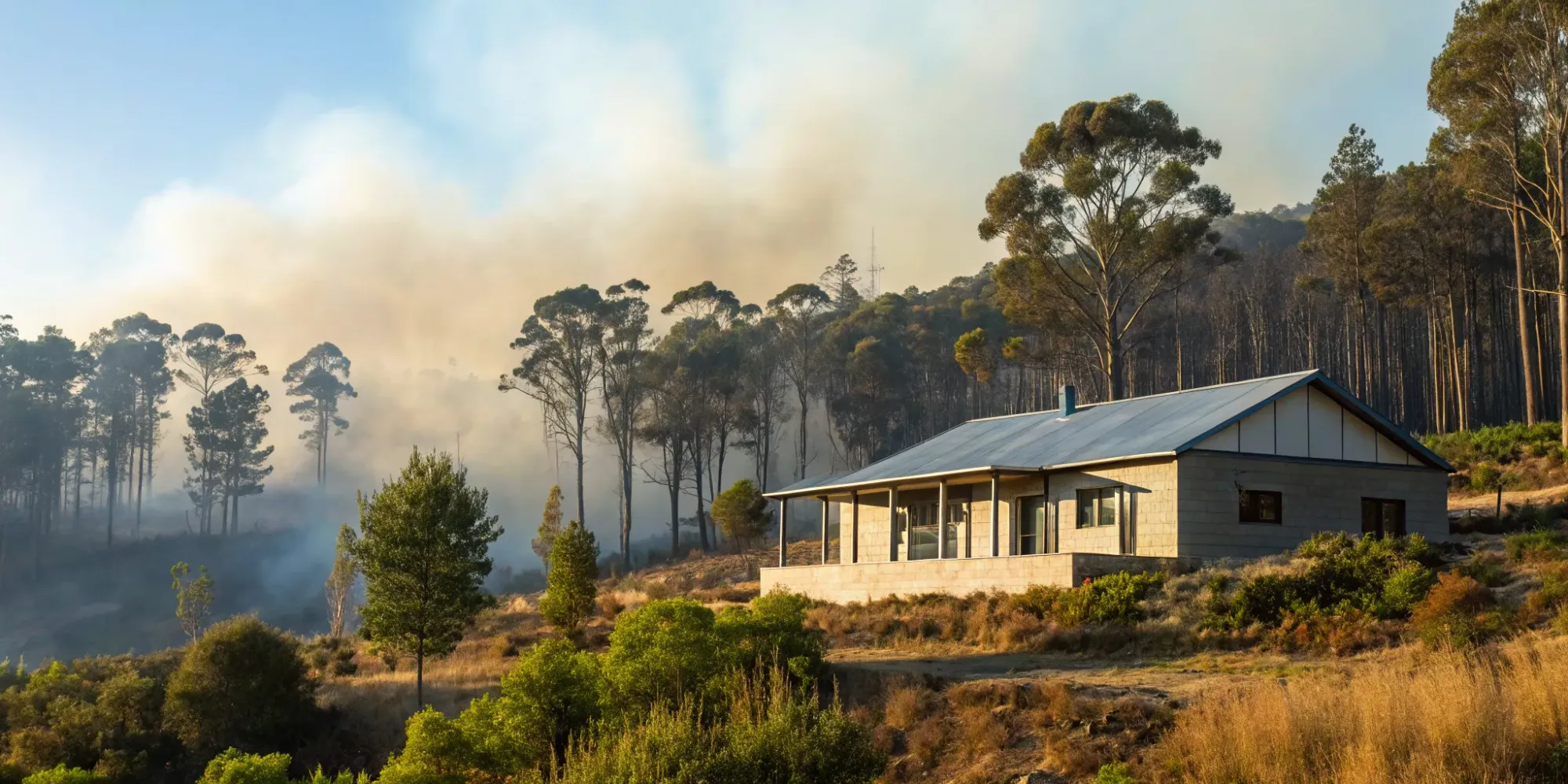
Wildfire Building Regulations: A Homeowner's Guide
February 6, 2026 · 16 min read
Building a home that can withstand a wildfire is one of the smartest financial decisions you can make. It’s not just about protecting your property from disaster; it’s about securing its long-term value and insurability. As fire seasons intensify, insurance companies are looking closely at how homes are built, and compliance is becoming a non-negotiable factor for securing coverage. A home built to modern standards is seen as a lower risk, which can lead to better insurance options and higher resale value. This article breaks down how following wildfire building regulations is a direct investment in your home’s financial stability and your own peace of mind.
Key Takeaways
- Compliance is a financial strategy: Following wildfire codes isn't just about passing inspection; it's a direct investment in your home's insurability, market value, and long-term financial security.
- Think in layers of protection: A truly resilient home relies on a system of defenses. Prioritize a Class A roof, noncombustible siding, ember-proof vents, and well-maintained defensible space to create a hardened exterior.
- Don't guess on local codes: Since regulations differ from one county to the next, getting an expert to review your building plans is the best way to confirm you're building a safe, compliant, and insurable home from the start.
Wildfire Building Codes: What They Are and Why They Matter
If you’re building or renovating a home in an area prone to wildfires, building codes can feel like just another hurdle to clear. But it’s helpful to think of them less as a rulebook and more as a blueprint for safety. These regulations are designed with one primary goal: to give your home the best possible chance of survival when a wildfire strikes. They provide a clear, research-backed framework for making smarter construction choices that can dramatically reduce your home’s vulnerability.
These codes guide everything from the materials you use for your roof and siding to the type of windows you install and the landscaping you plant around your property. They focus on preventing ignition from embers, which are the leading cause of home loss during a wildfire. By requiring things like non-combustible siding, covered eaves, and fine-mesh screens on vents, the codes create a hardened shell that is much more difficult for fire to penetrate. Understanding and following these standards isn’t just about passing inspections. It’s about protecting your family, your investment, and your peace of mind. A home built to modern wildfire standards is more resilient, which can make a critical difference. Plus, compliance is becoming a non-negotiable factor for securing homeowners insurance in high-risk areas.
What is the Wildland-Urban Interface (WUI)?
You’ll hear the term “Wildland-Urban Interface,” or WUI, a lot when discussing wildfire safety. So, what does it mean? According to the International Code Council, the WUI is any area "where wildlands meet developed areas." Think of it as the zone where homes and communities push up against forests, grasslands, or other natural landscapes. If you live in a subdivision that borders a national forest or a home with a canyon behind it, you’re likely in the WUI.
Because these areas are at a higher risk of wildfire, they are subject to specific building regulations. The International Wildland-Urban Interface Code (IWUIC) establishes the minimum standards for construction to protect against fire. It’s the foundational document that many local jurisdictions adapt to create their own codes.
The Real Cost of Non-Compliance
Choosing to ignore or cut corners on WUI building codes has serious consequences that go far beyond a failed inspection. The stakes are incredibly high. As the International Code Council points out, "Not following these rules in WUI areas can lead to serious dangers for people's lives and property, including fire and land erosion after fires." An ember-resistant vent or a fire-rated roof isn't just a line item on a budget; it's a critical defense mechanism for your home.
Failing to comply means building a structure that is fundamentally more vulnerable. During a wildfire, this can be the difference between a home that survives and one that is lost. The risk doesn't end when the fire is out, either. Post-fire erosion can lead to landslides and flooding, creating a secondary disaster for unprepared properties.
How Compliance Affects Your Insurance
Building to code is no longer just a conversation between you and your contractor—your insurance company is listening, too. As wildfire seasons intensify, insurers are becoming much more selective about which homes they are willing to cover in high-risk zones. A home’s construction details are now a major factor in its insurability.
According to risk experts at CRC Group, "How a home is built in wildfire zones can make or break its insurability." Insurers are tightening their underwriting requirements and looking for proof that a home has been built with resilience in mind. Using fire-resistant materials and adhering to WUI codes demonstrates that you’ve taken proactive steps to mitigate risk. This can make it easier to find coverage, potentially at a better rate, and ensures you have the financial protection you need.
Key Parts of Wildfire Building Regulations
When you’re building or renovating in a high-risk area, wildfire regulations can feel like a long checklist of rules. But these codes aren’t arbitrary. They focus on strengthening the most vulnerable parts of your home to give it the best possible chance of survival. Think of it as creating layers of protection, from your roof down to the landscaping. Understanding these key areas will help you make informed decisions that protect your family, your investment, and your peace of mind.
Choosing Fire-Resistant Roofing
Your roof is your home’s primary shield against falling embers, which are the leading cause of home ignition during a wildfire. That’s why building codes are so specific about roofing materials. Regulations often require a Class A roof assembly, which is the highest rating for fire resistance. Materials like clay, concrete tiles, and metal are excellent choices because they are noncombustible and can withstand high heat. When selecting your roof, it’s not just about the material itself but the entire system, including the underlayment and installation method. A properly installed Class A roof is one of the most important investments you can make for wildfire safety.
Protecting Your Home with Fire-Safe Siding
Your home's exterior walls are another critical defense layer. Embers can pile up against siding and ignite it, or radiant heat from a nearby fire can cause it to combust. Building codes in wildfire-prone regions mandate the use of exterior fire-resistant materials to prevent this. Materials like fiber-cement, stucco, and treated wood are common choices that meet these standards. The goal is to create a noncombustible shell around your home. This, combined with clearing flammable items away from the base of your walls, dramatically reduces the likelihood of your siding catching fire and spreading to the rest of the structure.
Securing Windows and Doors from Embers
A home can be built with the best fire-resistant materials and still be lost if embers find a way inside. Wildfires create a blizzard of tiny, burning embers that can enter through vents or gaps in your home’s exterior. Regulations address this by requiring specific features like dual-paned tempered glass for windows, which is more resistant to breaking from heat. They also mandate fine metal mesh screens over all vents (attic, foundation, and eaves) to block embers while still allowing airflow. Sealing gaps around doors and windows with weatherstripping is another simple but crucial step to ensure your home is properly buttoned up against an ember attack.
Creating Defensible Space Around Your Home
Wildfire safety doesn't stop at your front door. Building codes also include requirements for the area surrounding your property, known as defensible space. This is the managed zone around your home where vegetation is thinned and maintained to slow a fire’s spread and give firefighters a safe area to work. Typically, this is broken into zones. The first five feet around your home should be completely free of flammable materials—think gravel or concrete instead of mulch. From five to 30 feet, you should have lean, clean, and green landscaping with well-spaced trees. Creating this buffer is a non-negotiable part of building a wildfire-resilient home.
How Building Codes Change by Location
Building codes aren't a one-size-fits-all rulebook. What’s required for a home in one state can be completely different from the rules just one county over, especially when it comes to wildfire safety. This is because local conditions—like climate, vegetation, and topography—play a huge role in determining a home's actual risk level. A house nestled in the dense forests of the Sierra Nevada faces different threats than one built in the grassy foothills of the Rockies, and the building codes reflect that.
This localized approach is driven by a framework where state laws often provide general guidelines, but it’s up to counties and cities to establish the specific ordinances that developers and homeowners must follow. These local rules are designed to address the unique challenges of the area. Many of these high-risk regions fall into what’s known as the Wildland-Urban Interface (WUI), where developed areas meet or mix with wildlands. If you’re building or renovating in a WUI zone, you can expect to encounter a much more detailed and stringent set of building requirements designed to give your home the best possible chance of survival.
A Look at California's WUI Codes
California is a leader in wildfire-resilient building regulations, largely because of its long and challenging history with wildfires. The state has adopted strict building standards for homes in the Wildland-Urban Interface, outlined in Chapter 7A of the state building code. These rules are based on the International Wildland-Urban Interface Code (IWUIC), which aims to protect lives and property in these high-risk areas. A key requirement in California is the use of ember-resistant vents. Since flying embers are a primary cause of home ignition during a wildfire, the state mandates that all vents pass a rigorous test (ASTM E2886) to ensure they can block these fiery particles from entering your home.
Building Standards in Colorado's High-Risk Zones
While Colorado doesn't have a single statewide wildfire code like California's Chapter 7A, many of its counties and municipalities in high-risk zones have adopted their own strong building standards. This local approach allows communities to tailor regulations to their specific environment. A major driver behind this trend is the insurance industry. As wildfire seasons intensify, insurers are tightening their underwriting requirements for homes in wildfire-prone areas. This means that even if a specific building practice isn't mandated by a local code, it may be necessary to secure or maintain your homeowner's insurance. As a result, builders and homeowners are increasingly adopting higher standards for fire-resistant materials and defensible space.
Why Local Conditions Dictate the Rules
The reason building codes vary so much is simple: wildfire risk isn't uniform. Local jurisdictions are best equipped to assess their unique vulnerabilities and create rules that make sense for their community. A comprehensive regulatory program often involves multiple layers, from state-level guidelines to regional growth plans and, finally, to specific county and city ordinances. This allows for a tailored approach that considers factors like the type of vegetation, prevailing winds, and the slope of the terrain. This shift toward proactive policy and resilient building practices is a recognition that we can't just rely on emergency response—we have to build smarter from the ground up.
Common Challenges with Wildfire Compliance
Building a home that can stand up to wildfire is a smart goal, but it’s not always a straightforward one. Many homeowners run into the same hurdles, from sorting fact from fiction about building materials to figuring out the maze of local regulations. Understanding these common challenges is the first step toward overcoming them and building with confidence. It’s about knowing what to expect so you can create a clear plan for your project.
The good news is that these challenges are manageable with the right information and support. Whether you’re rebuilding or starting from scratch, knowing where the tricky spots are can save you time, money, and a lot of stress. Let’s walk through some of the most common issues you might face and how to approach them.
Debunking Myths About Fire-Safe Materials
One of the biggest hurdles is cutting through the noise of misinformation. It’s easy to assume that certain materials automatically make a home "fire-proof," but the reality is more complex. Many people believe their homes are safe because they aren't in the direct path of flames, but research shows that most homes lost in wildfires ignite from ember exposure, not the main fire front. These tiny, wind-blown embers can travel over a mile and get into small openings in your home’s exterior. This is why a holistic approach is so important; effective wildfire protection depends on how all your building materials and components work together as a system, not just one single element.
Managing the Costs of Building to Code
Let’s be honest: building with fire-resistant materials can be more expensive upfront, and that budget concern is a major challenge for many homeowners. It’s tempting to look for shortcuts, but the long-term cost of non-compliance—in terms of safety, insurance, and property value—is far greater. The key is to think strategically. Using exterior fire-resistant materials and creating noncombustible zones around your home are top priorities. However, these home hardening strategies aren't one-size-fits-all. A smart plan focuses on the most vulnerable parts of your home first, giving you the most protection for your investment and helping you manage costs effectively without compromising safety.
Making Sense of Permits and Regulations
If you’ve ever felt overwhelmed by building regulations, you’re not alone. The rules can be incredibly complex because they exist at multiple levels. You might be dealing with state laws, regional growth plans, and specific county or city ordinances all at once. This layered system of regulation is designed to create safer communities, but it can feel like a tangled web for a homeowner or even a contractor. Each jurisdiction has its own requirements for developers and property owners, which means what’s required for a home in one county might be different just a few miles away. This is why simply "following the code" requires knowing exactly which codes apply to your specific property.
How to Find the Right Contractors and Materials
Choosing the right team and materials is critical, but it can be a challenge to find contractors who are truly experienced in wildfire-resilient construction. A general contractor might not be familiar with the specific installation techniques required for fire-rated assemblies or the nuances of creating effective defensible space. Likewise, selecting materials isn't just about picking a product labeled "fire-resistant." It’s about understanding how that product performs as part of a larger system. For example, fire-resistant siding won’t do much good if your vents aren’t properly screened to block embers. Finding a builder who understands this and can execute the plan correctly is just as important as the plan itself.
How Wildfire Regulations Impact Your Insurance and Property Value
Building a home that follows wildfire safety codes isn't just about meeting legal requirements—it's a smart financial move. When you prioritize fire-resistant design and materials, you're not only protecting your family and your investment from disaster, but you're also making your home more attractive to insurers and future buyers. Think of compliance as a direct investment in your home’s long-term security, marketability, and financial stability. It’s one of the most powerful ways to build confidence in your property, even in a high-risk area.
Lower Your Premiums and Secure Coverage
As wildfire seasons intensify, insurance companies are becoming more selective about which homes they’re willing to cover in high-risk areas. Many are tightening their underwriting requirements, making it harder and more expensive to get a good policy. By building to wildfire codes, you demonstrate to insurers that your home is a lower risk. This can make a real difference, potentially leading to lower annual premiums and, most importantly, helping you secure coverage when others might be denied. Adhering to these standards shows you’ve taken proactive steps to protect your property, which is exactly what insurers want to see.
How Compliance Impacts Your Home's Value
It’s easy to assume that living in a wildfire-prone area automatically lowers your property value, but that isn’t the full story. A home built with modern, fire-resistant construction and proper mitigation strategies can maintain or even increase its value. Why? Because a compliant home is an insurable home, and insurability is a major factor for potential buyers. When your home meets or exceeds safety codes, it stands out as a secure, resilient, and responsible investment. This gives buyers peace of mind and can make your property far more desirable in a competitive market.
The Financial Payoff of Building a Safer Home
Effective wildfire protection is about creating a system where all the parts of your home work together—it’s not about relying on a single “fireproof” material. This holistic approach, which includes everything from your roofing and siding to your vents and landscaping, has long-term financial benefits. While using fire-resistant materials may have a higher upfront cost, it’s an investment that pays off by drastically reducing the risk of catastrophic loss. This system-based defense minimizes potential damage, saves you from costly repairs, and protects the financial asset you’ve worked so hard to build. It’s one of the clearest examples of how building a safer home protects your wallet.
How to Verify Compliance with Your Insurer
Don’t assume your insurance agent knows about the fire-safe features of your home. It’s up to you to be proactive and provide proof of your compliance. Keep detailed records of all fire-resistant materials, construction methods, and defensible space maintenance. Take photos and save receipts and permits. Once you have your documentation in order, schedule a meeting with your insurer to review the steps you’ve taken. Walking them through your home’s noncombustible zones and fire-resistant exterior can directly impact your policy. This simple act of communication confirms you’re a responsible homeowner and helps ensure you’re getting the credit you deserve for your fire-safe rebuilding efforts.
Where to Find Help with Wildfire Building Codes
Figuring out wildfire building codes can feel overwhelming, but you don’t have to do it alone. Reliable resources can guide you, whether you’re planning a new build or choosing materials. The key is knowing where to look for accurate, up-to-date information. From local government to national safety organizations, help is available to ensure your home is as safe and resilient as possible. These resources are your support team, ready to help you make confident decisions.
Your Local Building Department and Government Sites
Your first stop for information should be your local building department. They are the ultimate authority on the specific codes you must follow. These local rules are tailored to your community’s unique landscape and risk level, so what applies in one county might differ just miles away. For a broader perspective on your area's risk profile, the U.S. Forest Service offers a fantastic free resource called Wildfire Risk to Communities. This site provides interactive maps and data to help you understand the wildfire risk where you live, giving you a solid foundation before speaking with a building official.
Guidance from Professional Organizations
Beyond local government, national organizations provide excellent guidance on building in wildfire-prone areas. These groups conduct research to establish best practices that often go beyond basic code requirements. For example, FEMA’s Home Builder’s Guide to Construction in Wildfire Zones is an invaluable resource for homeowners and contractors. It explains how materials and construction techniques work together as a system to protect a home. This is a critical point—effective wildfire protection isn’t about a single fire-resistant product but how all the components of your home work together.
Getting an Expert Review of Your Building Plans
Reading guides is one thing, but applying that information to your architectural plans is another challenge. This is where an expert review provides incredible value and peace of mind. Having a specialist analyze your plans before construction begins helps catch potential issues with code compliance, material choices, and future insurability. This proactive step ensures your design choices align with the latest resilience strategies, like noncombustible zones and fire-resistant exteriors. A thorough plan review gives you the confidence that you’re not just meeting minimum requirements but are truly building a safer, more durable home.
Related Articles
- WUI Building Code Standards: A Practical Guide
- 5 Key WUI Architectural Plan Requirements
- Building Code for Wildfire Prone Areas Explained
- How to Meet Building Code Compliance for Wildfire Areas
Frequently Asked Questions
My house was built years ago. Do these wildfire codes apply to me, or are they just for new homes? Generally, building codes are applied to new construction and significant renovations or additions. If you’re just living in your home, you likely won’t be required to make upgrades. However, adopting the principles behind these codes is one of the smartest things you can do. Simple but critical actions, like creating defensible space or replacing old vents with ember-resistant models, can dramatically improve your home’s resilience and may even be necessary to maintain your insurance coverage.
Will building to code guarantee my home will survive a wildfire? There are no guarantees in a wildfire, and no home is truly "fireproof." The goal of these building codes is to significantly reduce risk and give your home the best possible chance of survival, primarily by preventing ignition from embers. Think of it as a complete defense system. When you combine a hardened structure with well-maintained defensible space, you create a property that is far less vulnerable and gives firefighters a safer space to defend it.
Building with fire-resistant materials sounds expensive. How can I manage the costs? It’s true that some fire-resistant materials have a higher upfront cost, but it’s helpful to see it as an investment in your home’s long-term safety and value. To manage the budget, focus on the most critical vulnerabilities first. Your roof, vents, and the first five feet around your foundation are the highest-priority areas. Addressing these first gives you the most significant return on your safety investment. A resilient home is also more likely to be insurable, which can save you money and stress down the road.
How do I find out the specific wildfire building codes for my exact property? The best and most accurate source of information is always your local city or county building department. They are the authority on the regulations that apply to your specific address. Most departments have websites with detailed information, and you can call or visit them to speak with a planner. They can confirm if your property is in a designated Wildland-Urban Interface zone and provide the exact requirements you’ll need to follow for any construction project.
Besides the structure itself, what is the most important thing I can do to protect my home? Hands down, creating and maintaining defensible space is the most critical action you can take. This means managing the vegetation and materials in the area surrounding your home to slow the spread of fire. The most important zone is the first five feet from your foundation, which should be completely free of flammable items like mulch, dead leaves, and firewood. Using materials like gravel or concrete in this immediate zone creates a noncombustible buffer that can stop a ground fire from ever reaching your walls.