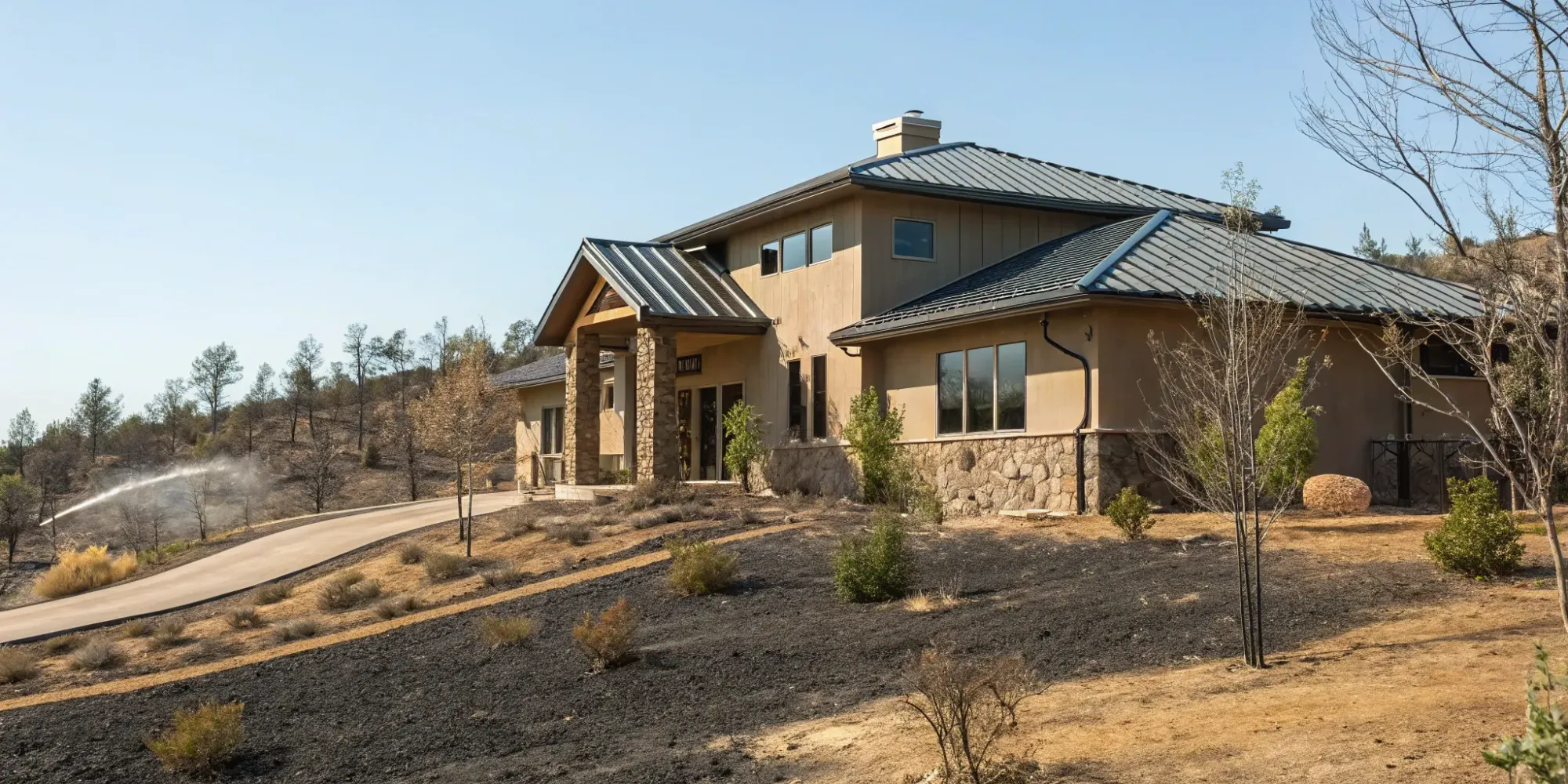
Essential Wildfire Proof Home Building Techniques
January 29, 2026 · 15 min read
When you picture a wildfire, you probably think of a massive wall of flames. But the reality is, most homes are lost to something much smaller: embers. These tiny, wind-blown sparks are the primary threat, getting pushed into every nook and cranny of a house, looking for fuel. Protecting your home means designing it to defeat this specific threat. It requires a focus on the details—the vents, the eaves, the foundation, and the landscaping right next to your walls. We’ll cover the most effective wildfire proof home building techniques designed to stop embers in their tracks, creating a hardened home that can withstand the most common cause of ignition during a wildfire.
Key Takeaways
- Think beyond a single material: A fire-resistant home is a complete system. Combine non-combustible materials for your roof and siding with smart construction methods that seal gaps and create a well-maintained defensible space to form a truly resilient structure.
- Seal your home against embers: The biggest threat is often wind-blown embers finding small entry points. Focus on the details that block them, like installing fine metal mesh over vents, enclosing eaves, and ensuring windows and doors have tight seals.
- Make resilience an ongoing habit: A fire-resistant home requires consistent upkeep. Make regular maintenance—like clearing gutters, managing vegetation in your defensible space, and inspecting your home's exterior—a routine part of your homeownership.
What Makes a Building Material Fire-Resistant?
When we talk about building a home that can withstand a wildfire, the goal isn't to make it completely "fireproof"—that's nearly impossible. Instead, the focus is on using materials that resist ignition and slow the spread of flames. This gives firefighters more time to respond and can prevent a stray ember from turning into a total loss. The right materials act as your home's first line of defense, especially on its most vulnerable surfaces like the roof and exterior walls.
Think of it as creating a non-combustible shell around your home. During a wildfire, the primary threat often comes from embers—small, glowing pieces of wood or vegetation that can travel a mile or more on the wind. If these embers land on flammable material, they can easily start a fire. Fire-resistant materials are specifically designed and tested to withstand high temperatures and direct flame contact without catching fire themselves. Understanding these ratings and material types is the first step toward building a home that’s safer for your family and more attractive to insurers.
Choose Non-Combustible Exteriors
Your home's exterior is its largest surface area, making it a prime target for wind-blown embers. Choosing a non-combustible material for your siding is one of the most effective decisions you can make. Materials like brick, stone, stucco, and fiber cement don't burn, which means they won't fuel a fire or allow it to easily penetrate your walls.
Unlike wood, fiber cement siding is a non-combustible option that offers the look of traditional siding without the fire risk. When embers land on a non-combustible surface, they are far more likely to burn out on their own instead of igniting the structure. This simple material choice can dramatically improve your home's ability to survive a wildfire event.
Install a Fire-Resistant Roof
During a wildfire, your roof is the part of your home most likely to catch fire. Embers can travel for miles and land on your roof, where they can ignite flammable materials like wood shakes or get trapped in gutters filled with dry leaves. According to CAL FIRE, making changes to your home through a process called "hardening" can greatly increase its chances of survival.
The most critical hardening measure for your roof is selecting a Class A fire-rated material. Options like asphalt shingles, concrete or clay tiles, and metal roofing all offer excellent fire resistance. These materials are designed to prevent embers from burning through to the combustible materials underneath, effectively shielding the core of your home.
Compare Fiber-Cement and Wood Siding
When deciding on siding, homeowners and builders often weigh aesthetics, cost, and durability. In wildfire-prone areas, however, fire resistance should be the top priority. While engineered wood siding offers good protection against weather, it doesn't perform as well as fiber cement in extreme heat. As one construction expert notes, fiber cement siding excels in fire resistance.
This is because fiber cement is made from a mixture of sand, cement, and cellulose fibers, creating a product that simply will not burn. Engineered wood, while treated with fire-retardant chemicals, still contains wood particles that can combust under intense heat. For true peace of mind, choosing a non-combustible material is the clearer path forward.
Understand Class A Fire Ratings
Achieving a Class A fire rating isn't just about the material you see on the surface. Many people believe that simply installing Class A shingles is enough, but that’s one of the most common fire-resistant roofing myths. Under official testing standards, a roof is evaluated as a complete system. This includes the surface material, the underlayment, and the roof deck sheathing.
To get a true Class A rating, all components must work together to resist fire. This means you can't put Class A shingles over a flammable wood deck and expect top-tier protection. When planning your roof, make sure your architect or builder specifies a complete Class A-rated roofing assembly to ensure every layer provides the protection you need.
How to Create Defensible Space
The materials you choose for your home are just one part of the equation. The space around your house plays an equally critical role in its survival during a wildfire. This buffer zone, known as defensible space, is designed to slow or stop an approaching fire, giving your home a fighting chance and providing a safer area for firefighters to work.
Creating defensible space isn’t about clear-cutting your entire property. It’s a strategic approach to landscaping that manages vegetation in zones, reducing flammable "fuel" that a fire can consume. By carefully selecting, placing, and maintaining plants and hardscaping, you can disrupt a wildfire's path and reduce the risk of embers igniting your home. Think of it as your home’s first line of defense, where smart landscaping choices directly contribute to its resilience. The following steps break down how to create and maintain this vital protective area.
Establish a 30-Foot Clear Zone
The area immediately surrounding your home is the most critical. Your goal is to create a 30-foot clear area that is lean, clean, and green. This zone should be an ember-resistant environment, free of anything that could easily catch fire. Start by removing all dead or dry plants, weeds, and grass. Rake up fallen leaves, pine needles, and twigs, paying special attention to areas under decks and in gutters.
This is the perfect place to use non-flammable hardscaping like stone, gravel, or cement walkways. If you have plants in this zone, make sure they are well-irrigated and properly maintained. The idea is to create a space where fire has nothing to feed on, effectively starving it before it can reach your walls.
Select Fire-Resistant Plants
Your plant choices matter immensely. While no plant is completely fireproof, many are considered fire-resistant because they are less likely to ignite and burn intensely. When landscaping, pick plants that have high moisture content, open and loose branches, and low levels of flammable oils. Succulents like agave and yucca are excellent choices, as are certain perennials like lavender and sage.
Avoid plants with waxy leaves, strong odors, or those that accumulate a lot of dead, dry material, such as juniper, cypress, and pine. Even with fire-resistant plants, regular maintenance is key. Keep them watered, pruned, and free of dead leaves or branches to ensure they remain a fire-safe part of your landscape.
Space Out Trees and Vegetation
How you arrange plants and trees on your property can either create a path for fire or a barrier against it. Proper spacing is essential to prevent a fire from jumping from one plant to another and eventually reaching your home. As a general rule, space shrubs at least 15 feet apart to create fuel breaks.
For trees, focus on vertical clearance. Remove low-hanging branches up to 15 feet from the ground to stop a ground fire from climbing into the treetops—a phenomenon known as creating "ladder fuels." The National Interagency Fire Center provides excellent guidelines for protecting your home by managing this kind of vegetation. This simple pruning can make a huge difference in a wildfire.
Use Non-Combustible Hardscaping
Hardscaping refers to the non-living elements of your landscape, like fences, patios, and walkways. Integrating non-combustible materials into your design is a powerful way to build fire resistance. Use materials like brick, stone, pavers, and concrete to create patios and paths that act as effective fuel breaks.
Pay special attention to your fencing. A wooden fence can act like a wick, carrying fire directly to your house. To prevent this, use non-combustible materials like metal or masonry for the section of the fence that connects directly to your house. Even just the first five feet can significantly reduce your risk. These thoughtful choices in your yard’s design can be just as important as the materials you use for your home itself.
Which Building Methods Improve Fire Resistance?
Beyond choosing the right materials, the way your home is constructed plays a huge role in its ability to withstand a wildfire. Fire is opportunistic; it looks for small openings and weak points to exploit. The primary threat often isn't the main wall of flames, but the blizzard of embers that can travel a mile or more ahead of it. These tiny, glowing firebrands get pushed by the wind into every nook and cranny, looking for a place to land and ignite.
That’s why effective fire-resistant building methods focus on sealing up these vulnerabilities. Think of it as creating a complete, unbroken shield—or building envelope—around your home. This process, often called home hardening, involves paying close attention to the details that are easy to overlook: the vents in your attic, the gaps under your eaves, and the seals around your windows. Each of these elements can be a potential entry point for embers if not properly designed and protected. By addressing these areas methodically, you can significantly reduce the chances of your home igniting during a wildfire, making it a safer and more insurable property.
Install Ember-Resistant Vents
Vents are necessary for airflow in your attic, crawlspace, and foundation, but they can also be open doors for wind-blown embers. To prevent this, all vents should be covered with a fine metal mesh screen. The openings in the mesh should be between 1/16-inch and 1/8-inch to effectively block embers. It’s critical to use metal screens, as plastic or fiberglass mesh can melt or burn away in high heat, leaving your home exposed. This is a relatively simple and inexpensive upgrade that provides a crucial layer of defense for your home’s most vulnerable entry points.
Enclose Eaves and Overhangs
Open eaves and roof overhangs are another common weak spot. They can trap hot air and embers, creating a perfect spot for a fire to start and quickly spread to your roof and attic. The solution is to "box in" or enclose your eaves with fire-resistant materials like fiber cement soffits or treated wood. This creates a smooth, solid surface that prevents embers from accumulating. By closing off these gaps, you eliminate a major fire trap and strengthen the protective shell around your home, making it much more resilient against ember attacks.
Protect Your Foundation and Deck
The area where your home meets the ground is a critical zone to protect. Embers can collect at the base of your exterior walls, and if there’s any flammable material nearby, it can ignite the siding. It’s also essential to keep the area under your deck completely clear of leaves, pine needles, or stored items. Decks, especially wooden ones, can act as a fuel source that carries fire directly to your house. By maintaining a clean, non-combustible zone around your foundation and under your deck, you remove potential fuel and create a buffer against approaching flames.
Secure Windows and Doors
Windows are often the first part of a home to fail during a wildfire due to radiant heat, which can shatter the glass. Installing double-pane windows, with at least one pane made of tempered glass, offers much greater resistance. Tempered glass is stronger and can withstand higher temperatures before breaking. Additionally, ensure all doors, including your garage door, have tight seals and weather stripping to prevent embers from blowing in through the cracks. Adding fine mesh screens to all operable windows can also help by catching embers and reducing some heat exposure.
Consider Exterior Sprinklers
While not a substitute for a hardened home structure, exterior sprinkler systems can provide an additional layer of protection. These systems are designed to wet down your roof and the immediate defensible space around your home, which can help extinguish embers and slow the spread of flames. If a full system isn't feasible, simply having long garden hoses that can reach every part of your property is a good step. For those with a pool, well, or water tank, a gas-powered pump can ensure you have a reliable water supply even if the power goes out.
Common Myths About Fire-Resistant Homes
When you’re building or renovating in a high-risk area, you hear a lot of advice. Some of it is great, but some common beliefs about fire-resistant construction are oversimplified or just plain wrong. Relying on these myths can give you a false sense of security and leave your home vulnerable when it matters most. True resilience isn’t about finding a single magic-bullet solution; it’s about understanding how different elements of your home and property work together as a system.
Building a home that can withstand a wildfire requires a thoughtful, layered approach. It means looking beyond the surface of a material to understand its role in the larger structure and considering how your home interacts with the landscape around it. Let’s clear up a few of the most persistent myths so you can focus your energy and budget on strategies that make a real difference. Getting these details right from the start is the key to building a safer, more insurable home.
Why Metal Roofs Aren't a Silver Bullet
A metal roof is often the first thing people think of for a fire-resistant home, and for good reason—metal itself doesn’t burn. However, a metal roof alone doesn’t make your home fireproof. The real measure of safety lies in the complete roofing assembly, which includes the underlayment, decking, and ventilation components beneath the metal panels. If embers get under the panels and land on flammable materials, the roof can still fail. For true protection, every part of the system needs to hold a Class A fire rating and be installed correctly to prevent ember intrusion.
It's About More Than Just Materials
Choosing fire-resistant siding and windows is a critical step, but it’s only one piece of the puzzle. The most effective strategy is wildfire home hardening, a comprehensive approach that treats your house and its immediate surroundings as a single defensive system. This includes enclosing eaves to block embers, installing fine mesh over vents, and ensuring your deck is built from non-combustible materials. It also extends to your landscaping and maintenance routines, which are just as important as the materials you choose for your walls. True resilience comes from combining smart design with diligent upkeep.
Defensible Space is Non-Negotiable
You could build a concrete bunker, but if it’s surrounded by flammable vegetation, it’s still at risk. The vast majority of homes lost in wildfires are ignited by wind-blown embers, not the main wall of fire. These tiny sparks can travel a mile or more and will ignite anything flammable they land on, like dry leaves in a gutter or a woodpile stacked against the house. Creating and maintaining defensible space is your first and best line of defense. Even with the best building materials, a well-designed home needs a buffer zone to increase its chances of survival.
Think Long-Term Value, Not Just Upfront Cost
It’s easy to get sticker shock when looking at the price of fire-resistant materials. While the initial investment can be higher, it’s important to frame it as a long-term strategy. Building with resilience in mind protects your single largest asset, can make your home more attractive to insurers, and reduces the need for costly repairs down the line. Beyond your own property, these choices contribute to community-wide safety. Homes built to withstand fire slow a wildfire’s spread, protecting your neighbors and giving firefighters a better chance. This focus on long-term value is an investment in both your family’s safety and your community’s future.
How to Maintain Your Fire-Resistant Home
Building a fire-resistant home is a huge accomplishment, but the work doesn’t stop once construction is complete. Think of it like owning a car—it needs regular check-ups to perform its best, especially when it matters most. Ongoing maintenance is your first line of defense against wildfires. By staying on top of a few key tasks, you can ensure your home’s protective features remain effective year after year.
Creating a simple, seasonal maintenance plan helps you stay organized and proactive. It allows you to catch small issues before they become major vulnerabilities and keeps your defensible space clear and effective. This consistent effort not only protects your investment but also gives you peace of mind, knowing you’re doing everything you can to keep your home and family safe. Let’s walk through the essential steps for maintaining your home’s resilience.
Follow a Regular Inspection Schedule
Setting up a routine inspection schedule is one of the easiest and most effective ways to protect your home. At least twice a year—once in the spring and again in the fall—walk around your property with a critical eye. Check your roof and gutters for any buildup of leaves, pine needles, or other flammable debris. The National Interagency Fire Center notes that this simple task can significantly reduce the risk of embers igniting your home. Also, inspect siding and vents for any damage or blockages. A small crack or a clogged vent can be an open invitation for embers, so it’s important to address these issues right away.
Manage Vegetation Year-Round
Your defensible space isn’t a one-and-done landscaping project; it requires year-round attention to be effective. The goal is to maintain a 30-foot clear area around your home that is free of fuel for a fire. This means regularly removing dry grass, dead plants, and low-hanging tree branches. According to the Wildfire-Resistant Communities Alliance (WFCA), using non-combustible materials like stone or gravel in the first five feet around your foundation creates a critical barrier. Make vegetation management a part of your regular yard work, just like mowing the lawn. This consistent upkeep ensures your home always has a buffer zone against an approaching wildfire.
Know When to Repair or Replace Materials
Even the most durable, fire-resistant materials can degrade over time due to weather and sun exposure. Regularly inspect your home’s exterior for signs of wear and tear. Look for cracks in stucco, warped siding, or peeling paint that could compromise the material’s fire resistance. If you have wood siding or shakes, they may need to be re-treated with fire retardants every few years. Don’t put off repairs. Sealing up gaps and replacing damaged sections ensures your home’s exterior shell remains a continuous, solid barrier against heat and embers. Staying on top of these repairs is crucial for long-term protection.
Get a Professional Assessment
While your own inspections are vital, it’s also wise to get a professional assessment every few years. An expert can spot vulnerabilities you might miss, like outdated vents that aren’t ember-resistant or gaps in your eaves. As building codes and best practices evolve, a professional can recommend upgrades that align with the latest standards. For example, a wildfire home hardening guide can provide a detailed checklist, but an expert can help you prioritize which improvements will have the biggest impact. This professional insight gives you a clear action plan and ensures your home’s defenses are as strong as possible.
Related Articles
- Top Arizona Fire Resistant Material Recommendations
- 5 Steps to Designing a Home for Wildfire Resilience
- A Guide to Navigating Building Codes in Fire Zones
- 5 Key Features of Wildfire Resilient Architecture
Frequently Asked Questions
My budget is limited. Where should I start to make my home more fire-resistant? The most effective and affordable first steps focus on maintenance and creating defensible space. Before considering any major renovations, start by thoroughly cleaning your roof and gutters of all leaves and pine needles. Then, create a five-foot non-combustible zone directly around your foundation using materials like gravel or stone. From there, work on clearing dead vegetation and trimming trees within 30 feet of your home. These actions dramatically reduce the chances of embers igniting your property and cost more in time than money.
Is it true that a metal roof will make my home safe from wildfires? While a metal roof is an excellent non-combustible surface, it's not a standalone solution. A roof’s fire resistance depends on the entire system, including the underlayment and decking beneath the metal panels. If embers get blown underneath the panels and land on flammable materials, your home is still at risk. For true protection, you need a complete Class A-rated roofing assembly where every component works together to stop fire.
How important is my yard compared to the materials my house is made of? They are equally critical and work together as a single defense system. You could have a home built with the best fire-resistant materials, but if it's surrounded by flammable vegetation, it's still highly vulnerable to embers. Your yard, or defensible space, is your home's first line of defense. It's designed to slow an approaching fire and reduce the intensity of the heat, giving your home's fire-resistant structure a much better chance of survival.
I live in an older home. Are there any effective changes I can make without a full renovation? Absolutely. Many of the most important fire-hardening tasks are small retrofits. Start by covering all exterior vents—in your attic, foundation, and crawlspace—with 1/8-inch metal mesh to block embers. You can also enclose the undersides of your eaves and decks with fire-resistant materials to prevent embers from getting trapped. These targeted upgrades address your home's most common weak points and can be done without tearing down walls.
What's the difference between a 'Class A' material and a 'Class A' roof assembly? This is a crucial distinction. A "Class A" material, like an asphalt shingle or a clay tile, has passed a test for fire resistance on its own. However, a "Class A" roof assembly means the entire system—the surface material, the underlayment, and the roof deck—has been tested together and proven to resist severe fire exposure. Simply putting Class A shingles over a standard flammable wood deck does not give you Class A protection. You need the complete, rated system to ensure true safety.